
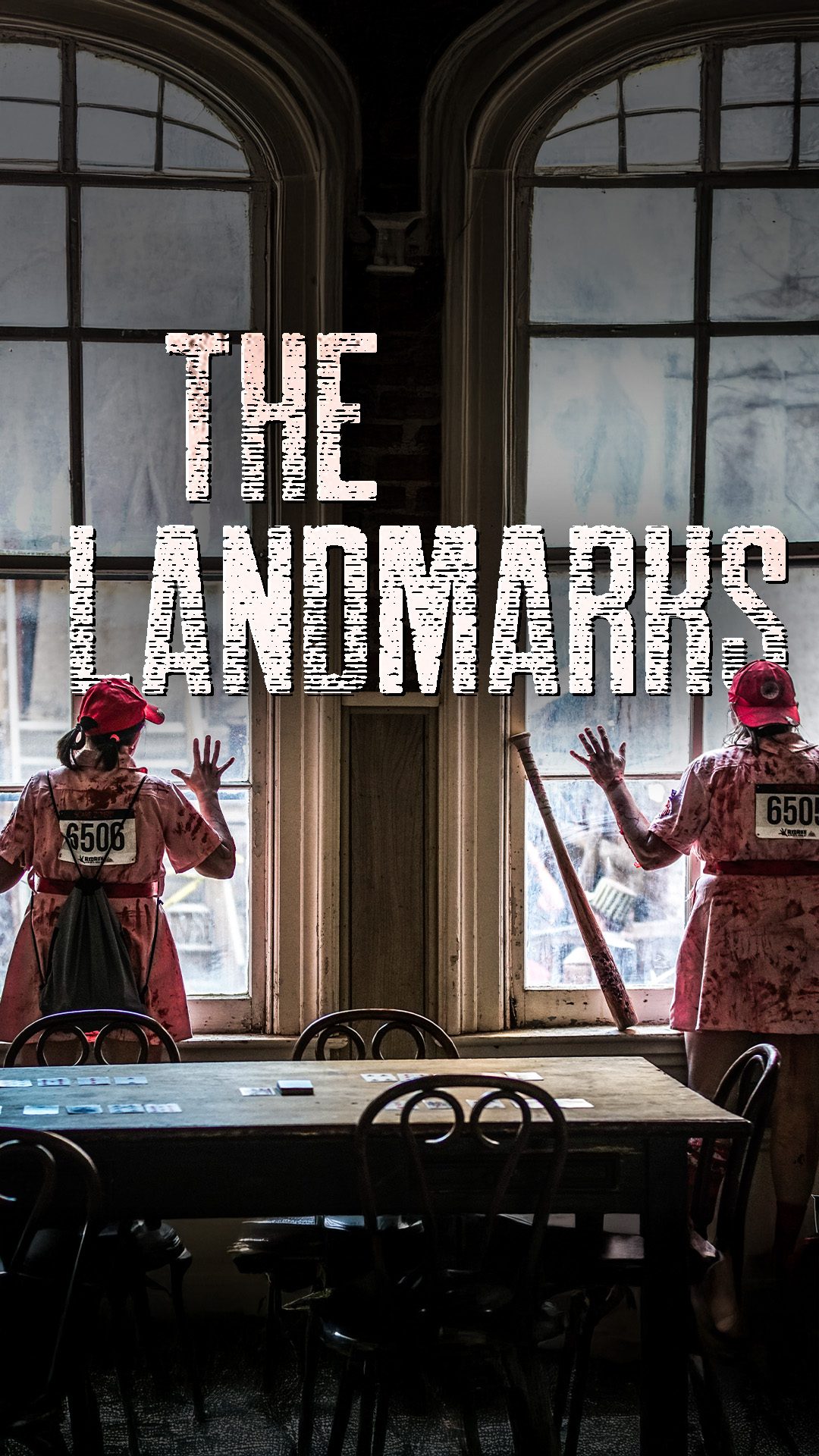

YOU BETTER RUN LIKE HELL.


Virginia City is a National Landmark and one of the nation’s largest historic districts with a remarkable collection of over 400 buildings – most dating from the 19th-century, abandoned mine shafts and adits (horizontal entrances to mines), and historic roads and streets. It is also considered one of the most haunted places on Earth. Virginia City holds a dark history with tales of spirits, unexplained phenomena, and tragic deaths.
Here are just a few of the historic landmarks and dark legends you will encounter during Redrun: Ressurection.
SALOONS & CLUBS
WASHOE
CLUB

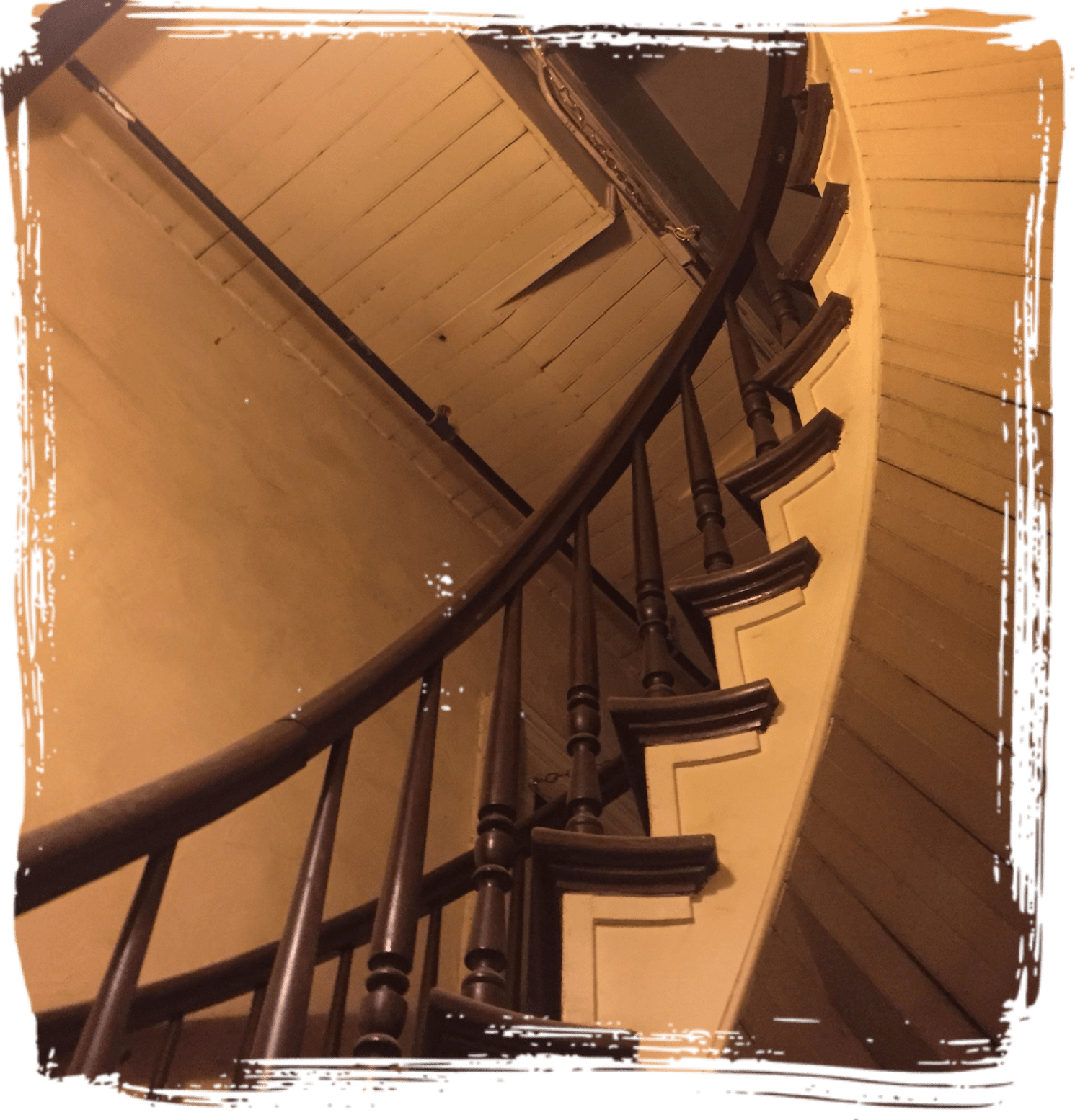

The Washoe Club is believed to be one of the most haunted locations in the West and has been repeatedly featured on ghost-hunting television shows, like the Travel Channel’s Ghost Adventures and A&E’s Ghost Hunters. Known as the Millionaire’s Club in its heyday, the exclusive social club boasted luxurious fineries including a library, billiard room, wine room, and a parlor with Italian marble accents. To gain access to the club, members climbed a spiral staircase, one of only two in existence in the U.S., with no support beam.
The infamous Lena, known as the Lady in Blue, is often seen floating in a blue dress at the top of the spiral staircase. Some believe she was a prostitute who was murdered at the club. A dark figure with a menacing presence who is sometimes seen on the upper floors is believed to be her killer. Other common apparitions at the Washoe Club include a frightened little girl on the 2nd floor, a young boy named Peter who hides in a closet on the 3rd floor, and a man who hanged himself in the 1990s. There have also been reports of multiple spirits inside The Crypt – a stone room in the lower level where 72 corpses were once stored when the winter ground was too frozen to dig their graves.
BUCKET
OF BLOOD
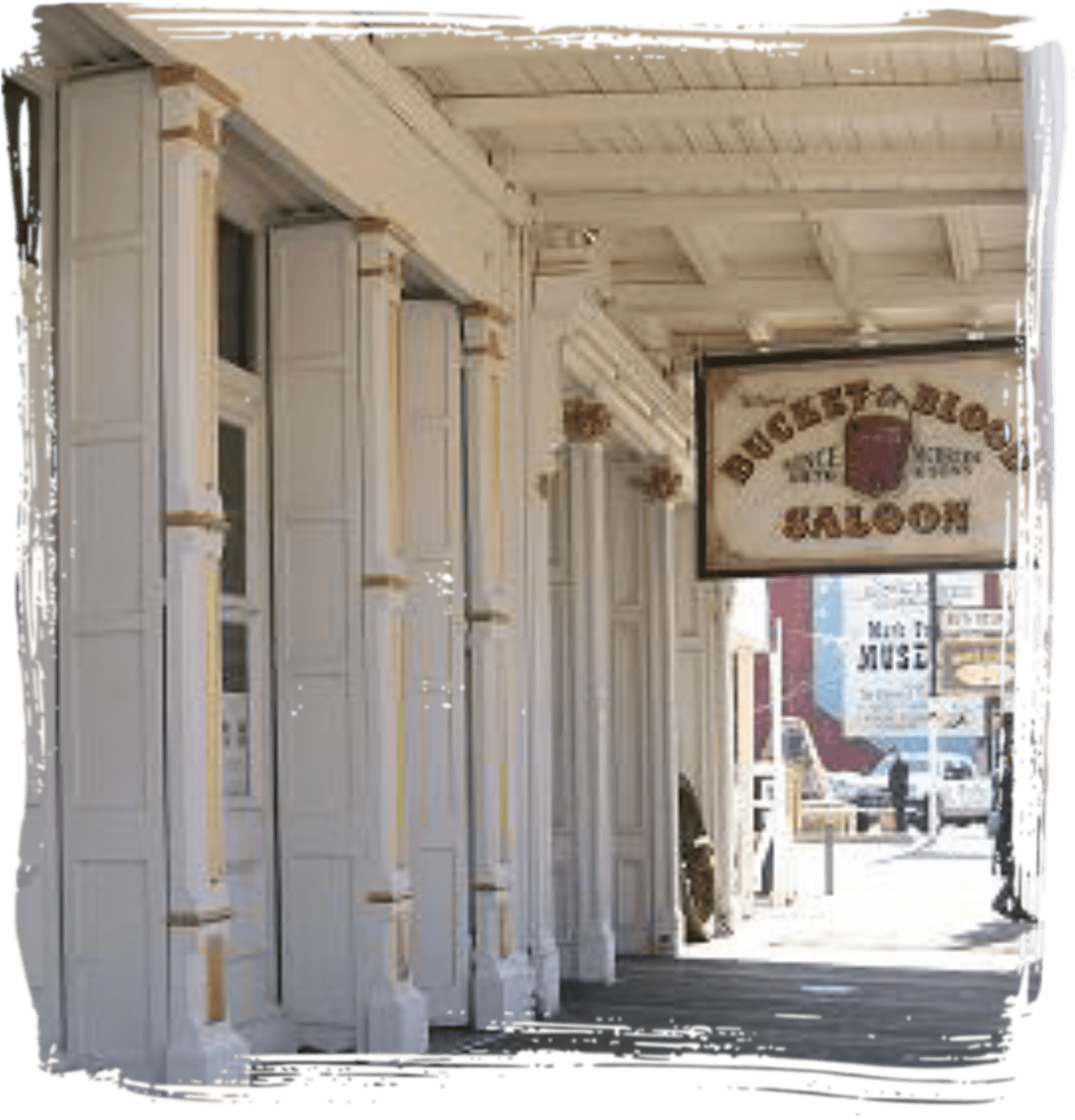
The BUCKET of BLOOD Saloon-“the Original” was constructed in 1876 after the Great Fire of 1875 which destroyed up to a thousand structures in Virginia City. The masonry walls of the Old BUCKET predate the Great Fire of 1875. Shadows of doorways recall a time when enclosed stairs led down to the Boston Saloon. The BUCKET of BLOOD has long served as a local landmark in the center of Virginia City. Until recently no one realized that the Boston Saloon lay under an asphalt cap to the rear of the building.
While today it presents a charming historic atmosphere, The Bucket of Blood’s roots are in the rowdy, silver-mining boomtown that it served. Fights often escalated, and after a night of particularly gruesome violence, the bar’s staff would mop up the blood-soaked floor. The water used for cleaning would be red, and when wrung out into a bucket, it looked like a literal bucket of blood.
DELTA
SALOON
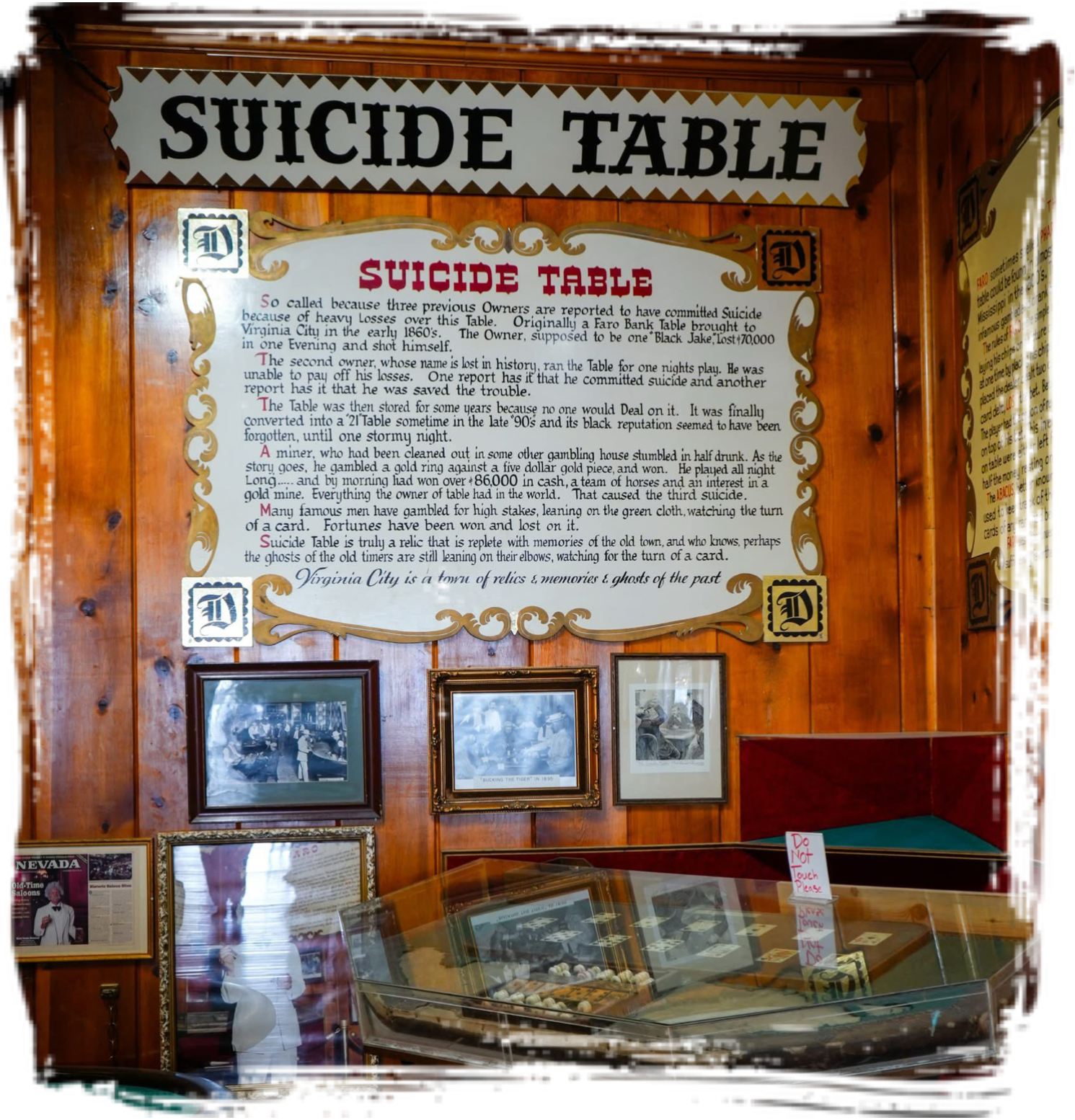
The Delta Saloon, originally opened in 1865, is one of the oldest, most historic properties in Virginia City. It’s also home to the infamous Suicide Table, a 19th-century faro table with a dark past. The first owner, Black Jake, lost $70,000 in one night and took his own life. The second unnamed owner met a similar fate after running the table just one night. Left unused for years, the table was later converted into a 21 table in the late 1890s. Its curse seemed forgotten… until a miner, half-drunk and desperate, won over $86,000 in cash, horses, and a gold mine from the table—triggering the third death. The spirits of all three are said to still haunt the Delta Saloon.
GOLD
HILL
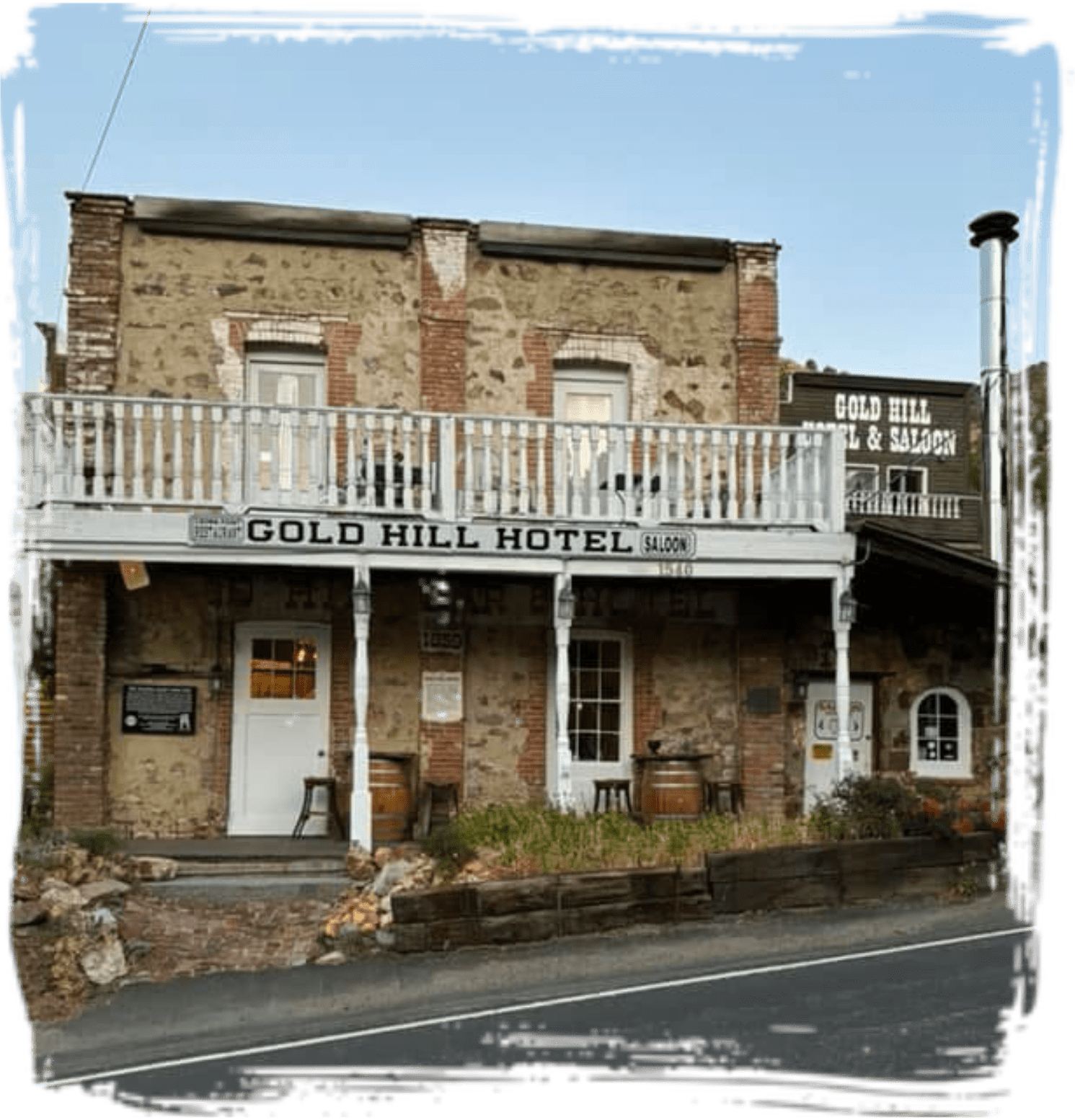
The Gold Hill Hotel is the oldest hotel in the state, with its original stone and brick building constructed as the Riesen House in 1861. It has served as a hotel, bar, and boarding house since then. It is also known as one of the most haunted locations on the Comstock. The Hotel is home to Roise and William, two spirits known to move items around, slam doors, turn lights on and off, and make their presence known by strong aromas. Rosie, a lady of the evening, prefers the smell of perfume, and is said to inhabit Room 4. When William is nearby there is an unmistakable odor of cigar smoke. He is said to live in Room 5.
E CLAMPUS
VITUS
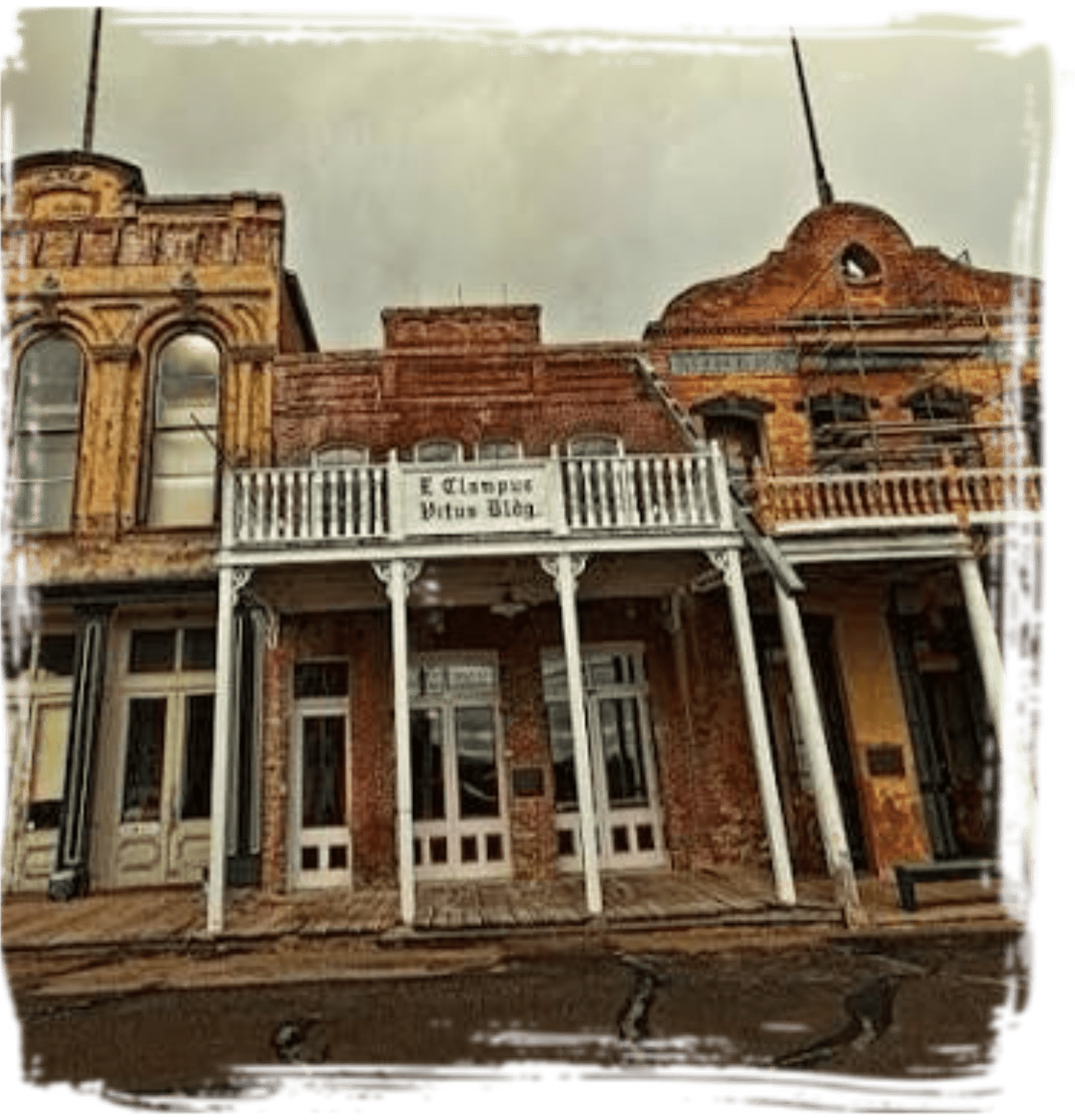
The E. Clampus Vitus building, originally known as The Moran Building, is home to the darkest energy in Virginia City. In the 1800s, a secret fraternity of leading citizens and businessmen was formed to combat lawlessness in Virginia City. This vigilance committee, known as the 601’s, served notices to undesirables to leave town within 24 hours. If they did not, they were severely dealt with. It is rumored that numerous murders were committed here – the 601’s meaning six feet under, zero trial, one rope. The building eventually deteriorated until all that remained was the front brick facade. The historic property was purchased in 1969 and restored by the Virginia City Chapter of E. Clampus Vitus who now use it as their lodge hall.
SILVER
QUEEN
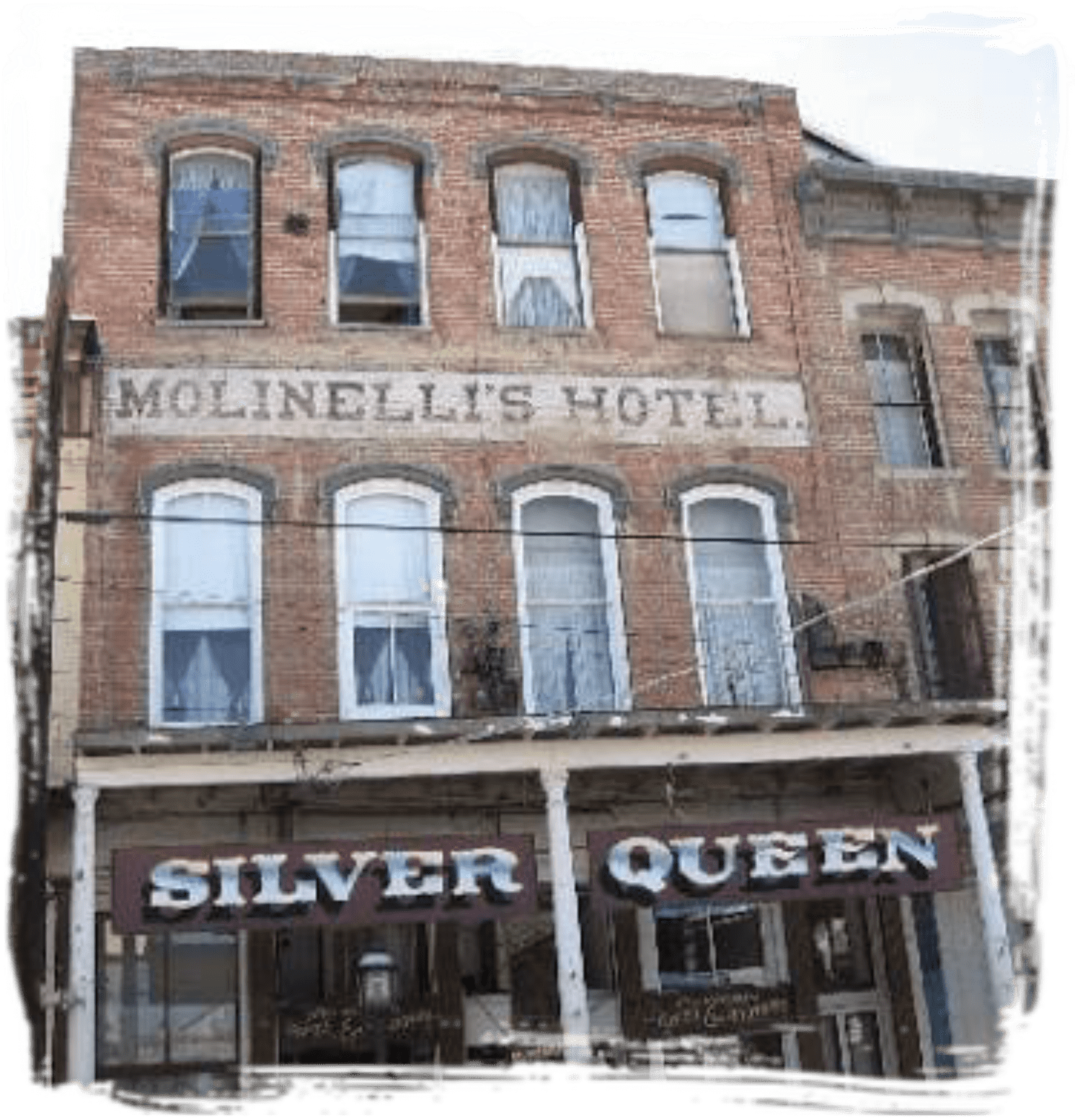
Built in 1876, the Silver Queen features the Legendary 15-foot-tall Silver Queen made with 3,261 silver dollars, the tallest back bar in the world, and a crypt turned wedding chapel. Room 11 at the Silver Queen hotel is said to be haunted by Rosie, a lady of the night who took her own life in the bathtub. Visitors have reported hearing tapping on their door, whispers, even growling. Additionally, while the hallways are carpeted, guests frequently report loud footsteps that sound like they are on wood floors.
CULTURAL & PERFORMANCE VENUES
PIPER’S
OPERA HOUSE
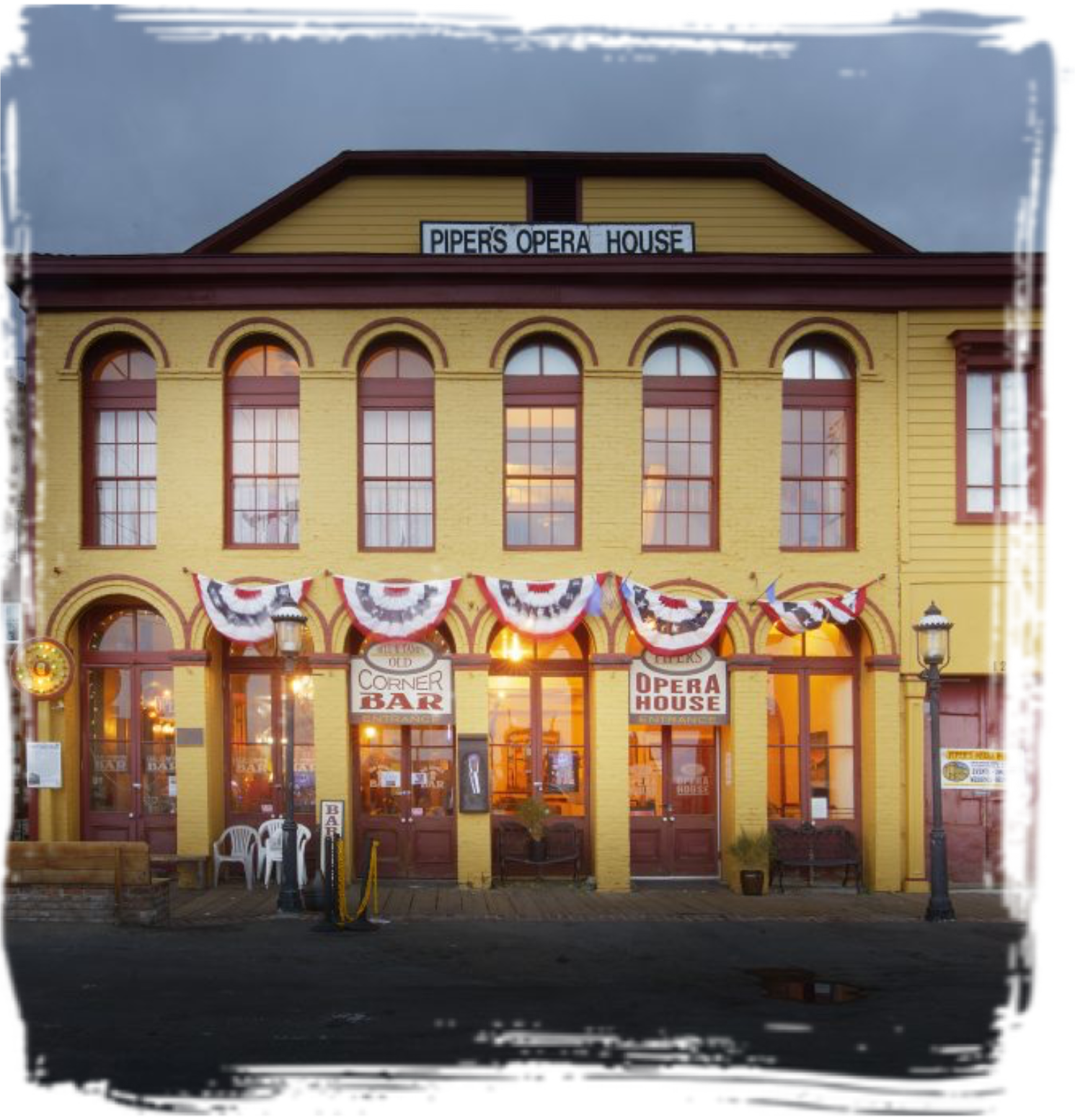
John Piper’s Opera House is one of the most significant vintage theaters on the West Coast. Listed by the League of Historic Theaters, it attracted famous stars from Europe and the United States from the 1860s until the 1920s. Spirits of long-age performers are said to tread the boards in Piper’s and the sound of audience laughter and soft applause has been heard emanating from the building long after the lights have gone down and the opera house is empty. Among the spirits, John Piper himself. His cigar smoke has been seen in unoccupied parts of Piper’s. Sightings of John have also been reported especially during a production’s opening night performance.
FOURTH
WARD
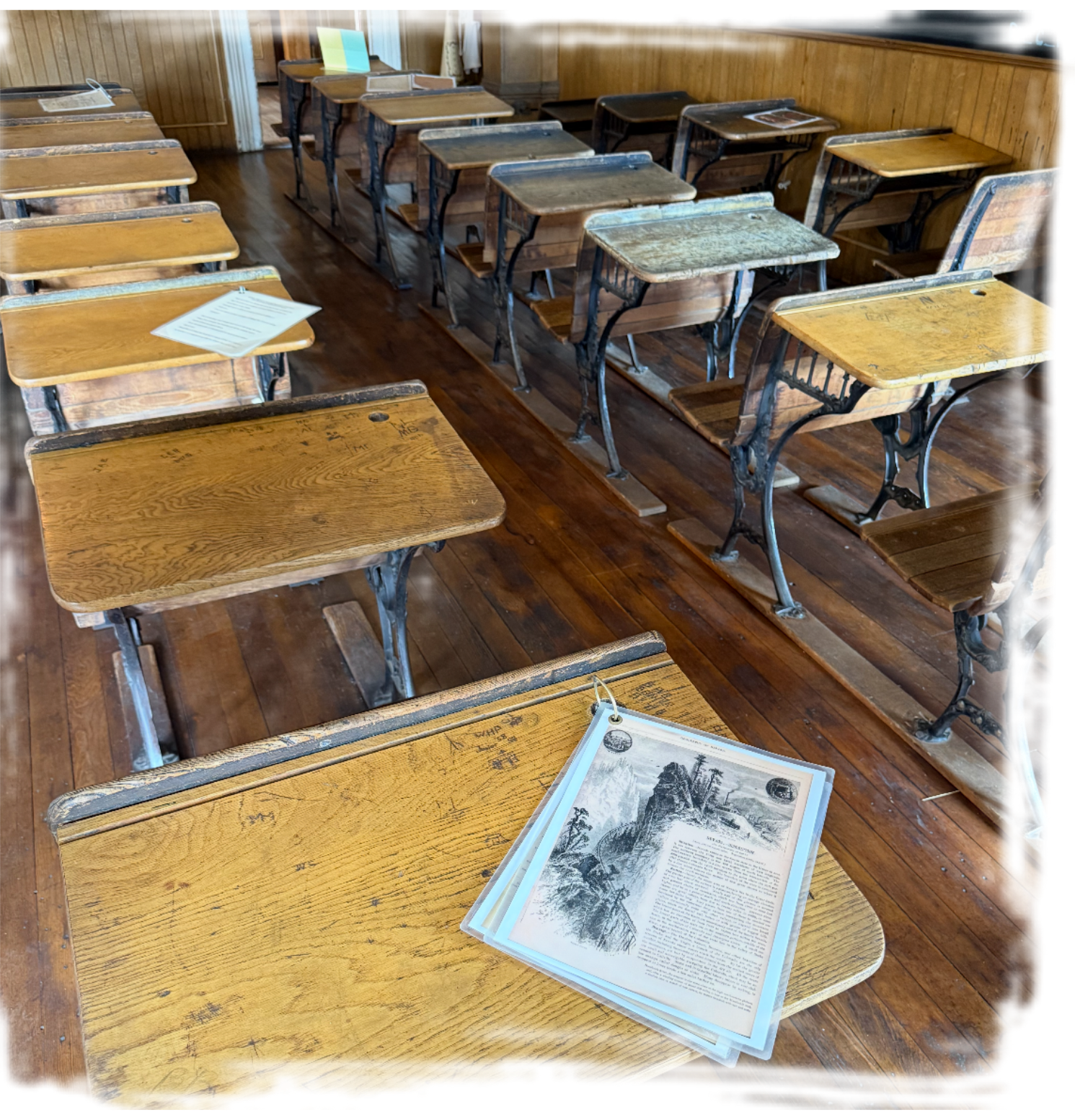
The historic Fourth Ward School, a majestic four-story building with a distinctive Mansard roof, opened in 1876 to accommodate over 1000 students. Children of all ages attended Fourth Ward until graduating its last class in 1936. Now operating as a museum, Fourth Ward echoes with paranormal activity. Several visitors have seen the apparition of a young girl rushing happily down the stairs only to vanish before reaching the bottom. The sound of children’s laughter is often heard by passersby in the night. And the spirit of a former teacher, known as Miss Suzette, is frequently seen searching the grounds.
SAINT
MARY’S
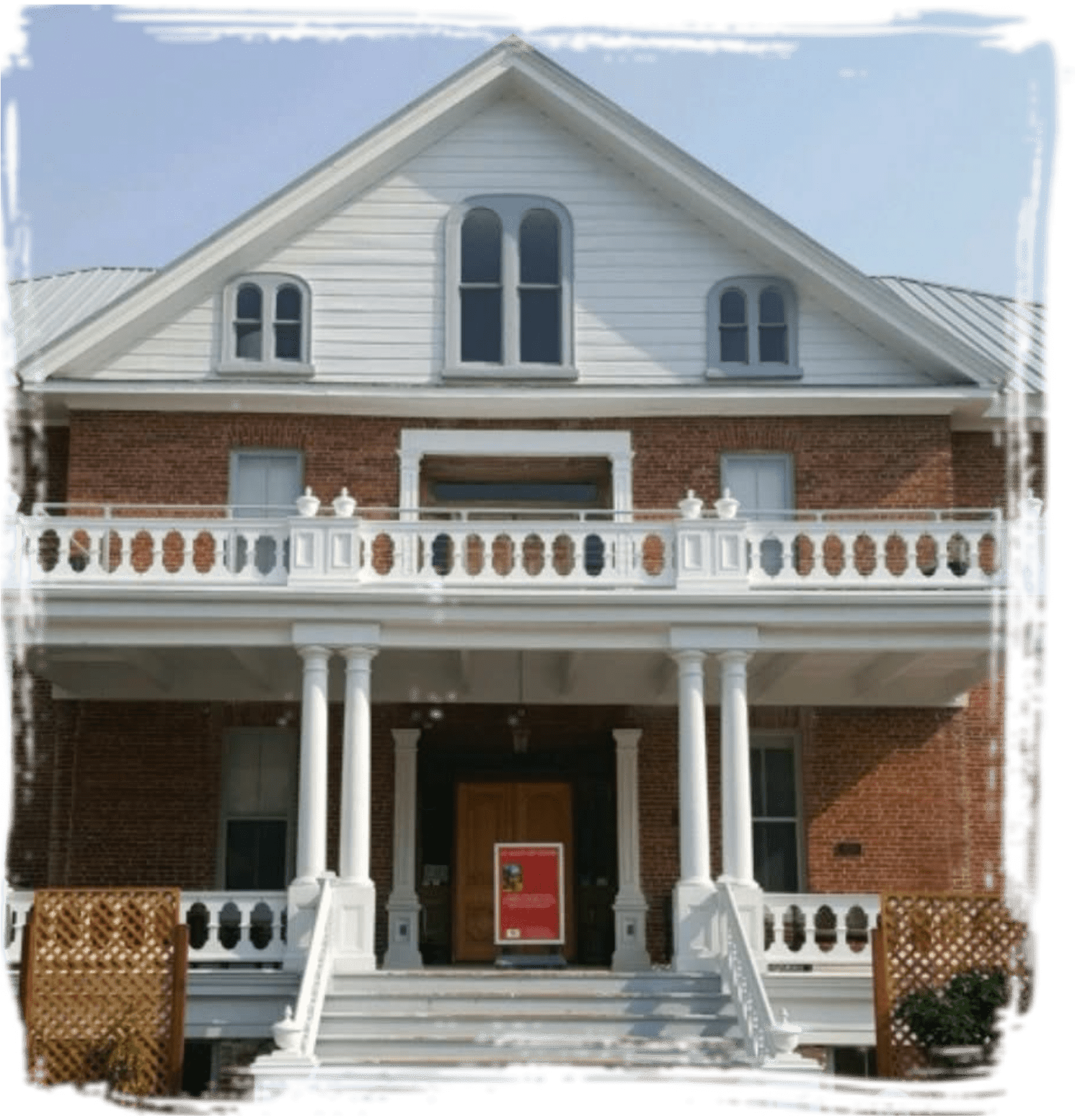
Saint Mary’s Art Center was once one of the finest hospitals in the West. The St. Mary Louise Hospital was open to anyone. It had an operating room on the first floor, an insane asylum on the fourth floor, an emergency area in the basement, and a nursery for children. Witnesses have reported spotting apparitions inside the building and on the front lawn, the sound of heavy footsteps in the halls, ladies’ voices, and even gurneys being rolled around.
The most well-known spirit is The White Nun. It is believed she perished in saving her patients from a fire that broke out in the hospital. The White Nun is usually seen in Room 11, the former chapel, as well as wandering the halls and staring forlornly from one of the building’s third-story window.
TERRITORIAL
ENTERPRISE
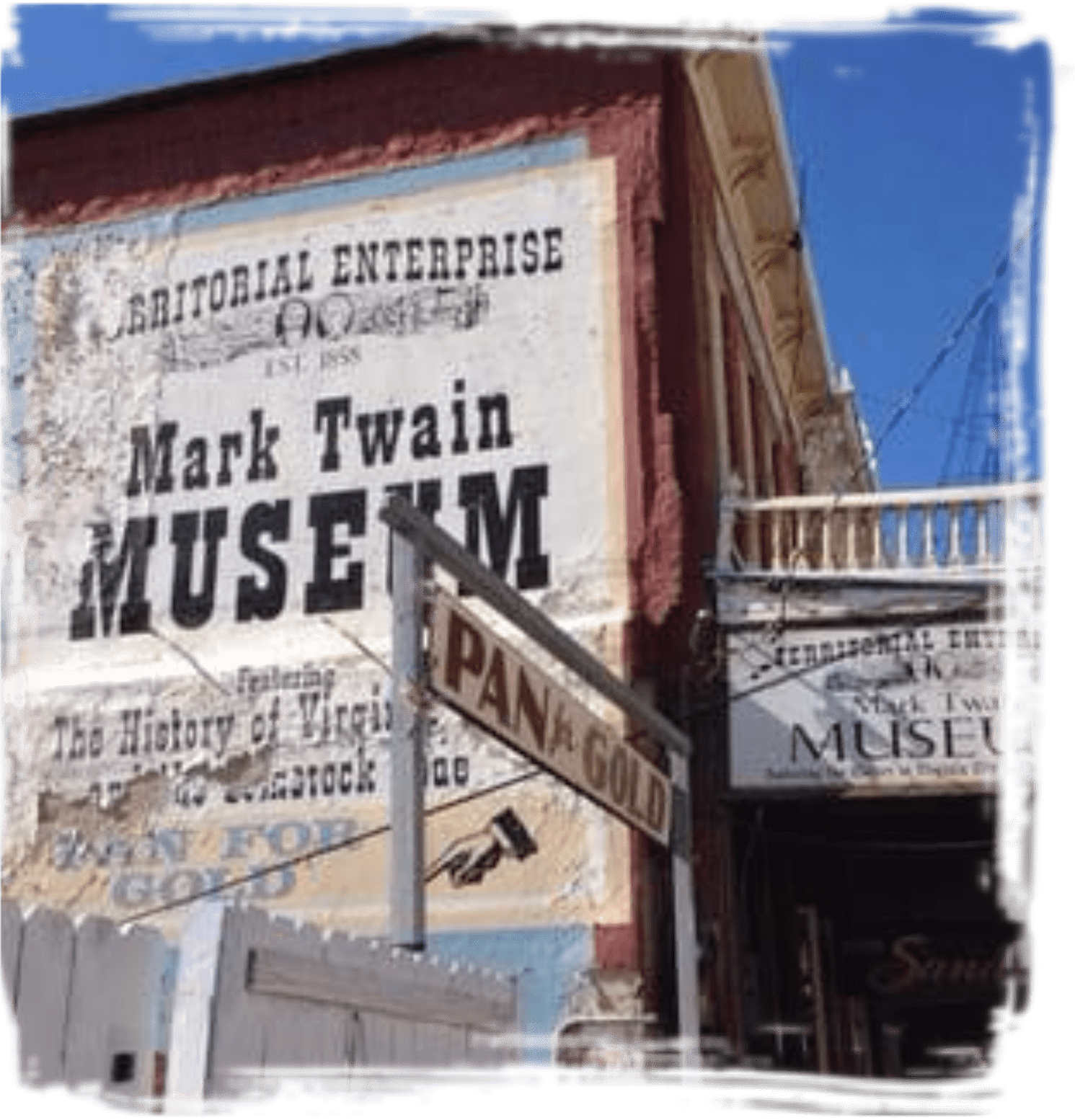
The Original Territorial Enterprise Newspaper Building was home to one of the most influential publications in the early American West and employed the aspiring writer Samuel Clemens, who first used the pen name “Mark Twain” while working for the Enterprise. Now the Mark Twain Museum, the building still has the original press room which was the only portion of the building that survived the 1875 fire.
MACKAY
MANSION
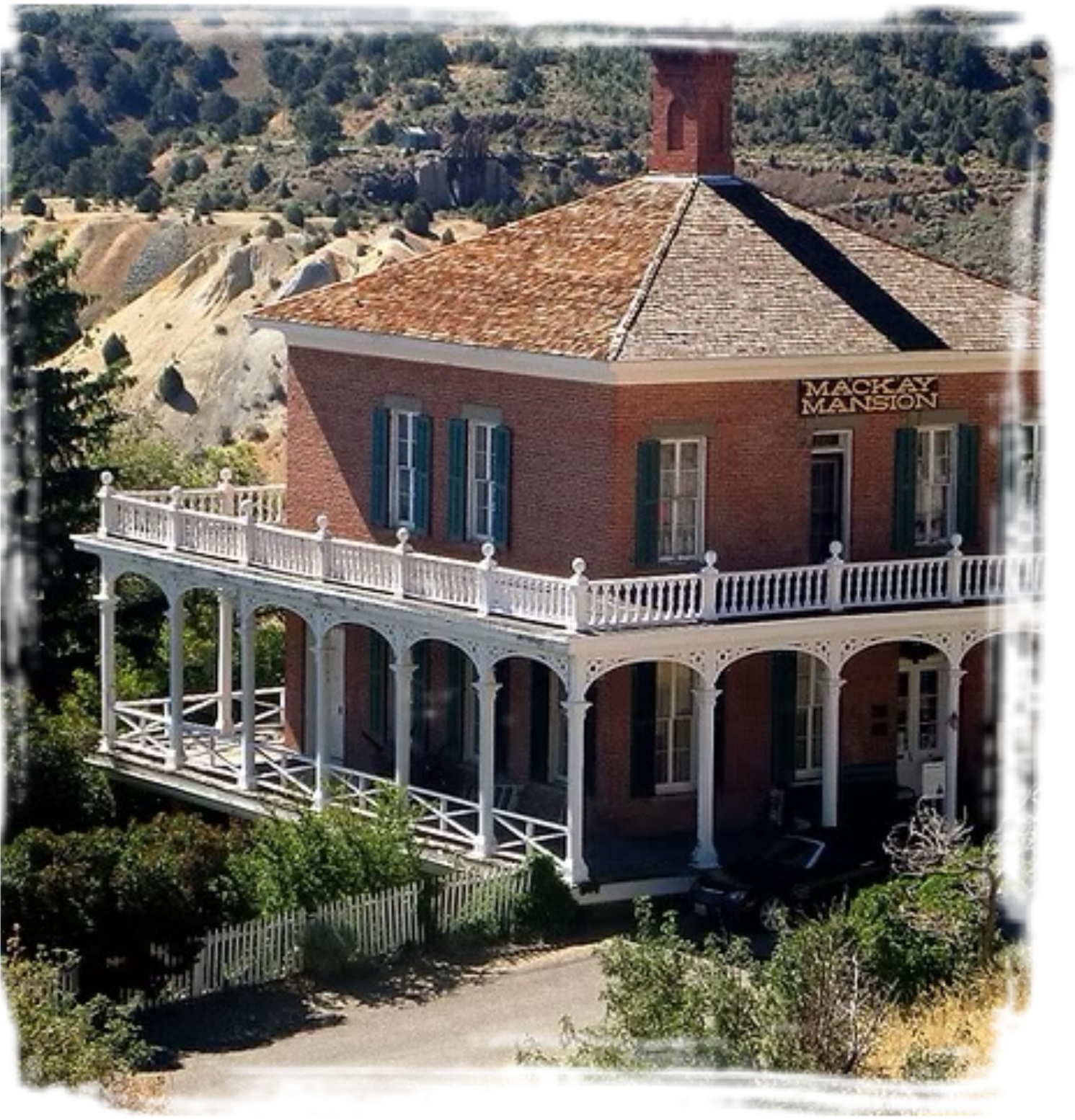
Built in 1859 by George Hearst, the Mackay Mansion is one of the few remaining original structures that survived both the major fires in Virginia City. It also is one of the few buildings with original furniture, carpet, wallpaper, and chandeliers. The mansion was later sold to John Mackay, otherwise known as one of the four Silver Kings and the richest man to come out of the Comstock.
The Mackay Mansion, featured on Ghost Adventures and the Dead Files, is suspected to be home to a multitude of spirits. One, a woman dressed in Victorian clothing who has been seen sitting in the living room and wandering the third floor, is believed to be the former lady of the house, Mrs. Mackay. Also on the third floor, two young girls known as Emma and Lily, have been known to tug on clothing asking to play. The spirits of two bank robbers, who were shot in the chest attempting to rob Mackay’s safe, are said to haunt the first floor of the mansion. Harriet, a maid for Mackay, has been seen in the parlor. And a spirit known as the Shadow Man has been seen throughout the home, which many believe to be John Mackay himself.
MINES & INDUSTRIAL LANDMARKS
YELLOW
JACKET MINE
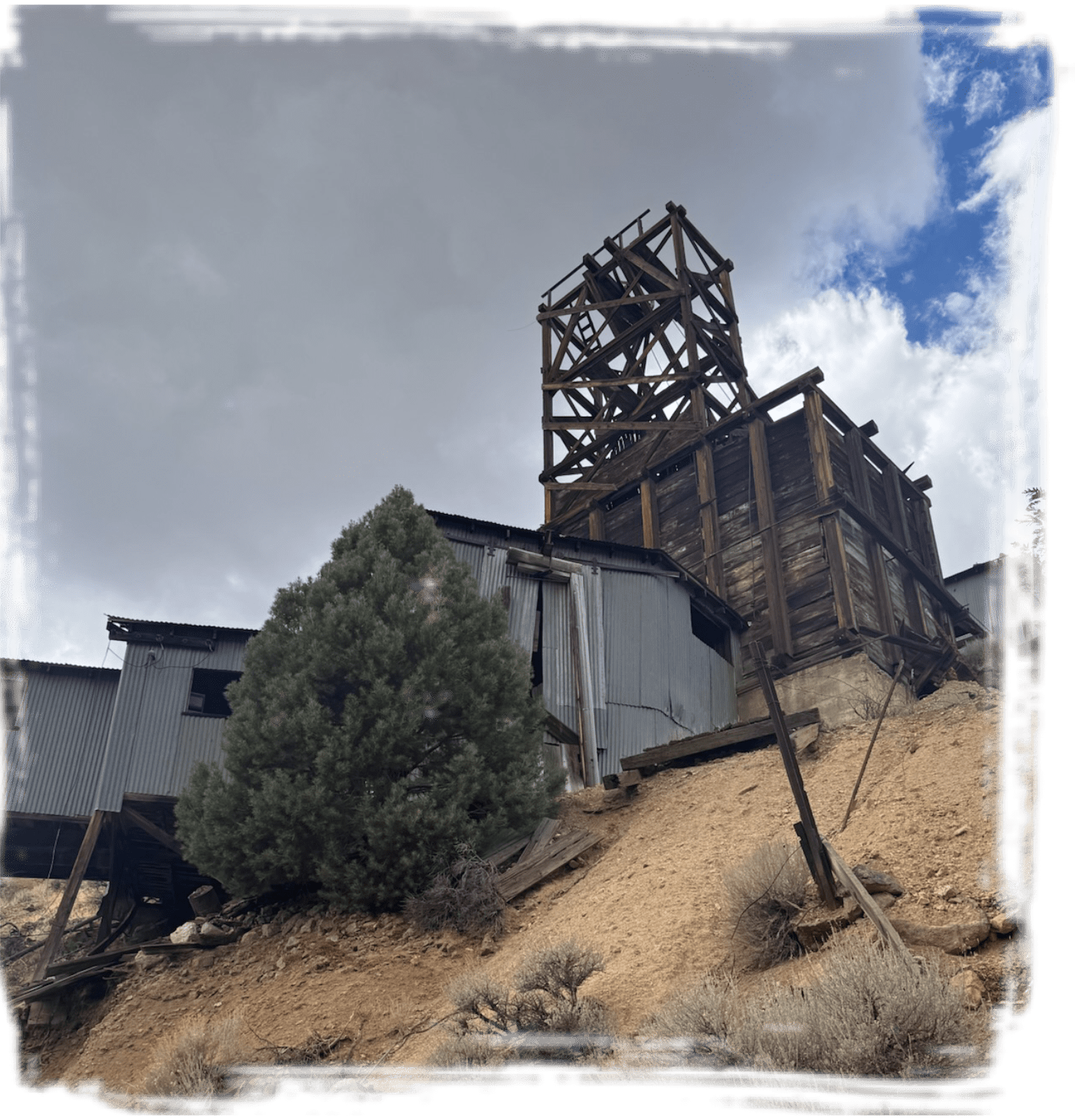
The Yellow Jacket Mine is the site of Nevada’s deadliest mining disaster. In 1869, a fire scorched through the interconnected mine shafts, killing 35-40 miners. Many believe a miner on the night crew left a candle burning, causing a fire that smoldered for hours, generating billows of black smoke and a reserve of suffocating carbon monoxide that lingered in the depths of the mine. At dawn, when miners descended in cages to the various levels of the mine, it created an influx of oxygen, causing the fire to roar to life, the framework at the 900-level to collapse, and the tunnels to flood with poisonous gas. At least one of the miners who tried to escape in a cage was beheaded. Many of the bodies were never recovered.
The Yellow Jacket Mine is one of the most haunted locations in Nevada. Visitors and locals have reported unexplained sounds, strange occurrences, and apparitions at the Miner’s Lodge and the historic Gold Hill Hotel, which the mine runs beneath.
SAVAGE
MINE PIT
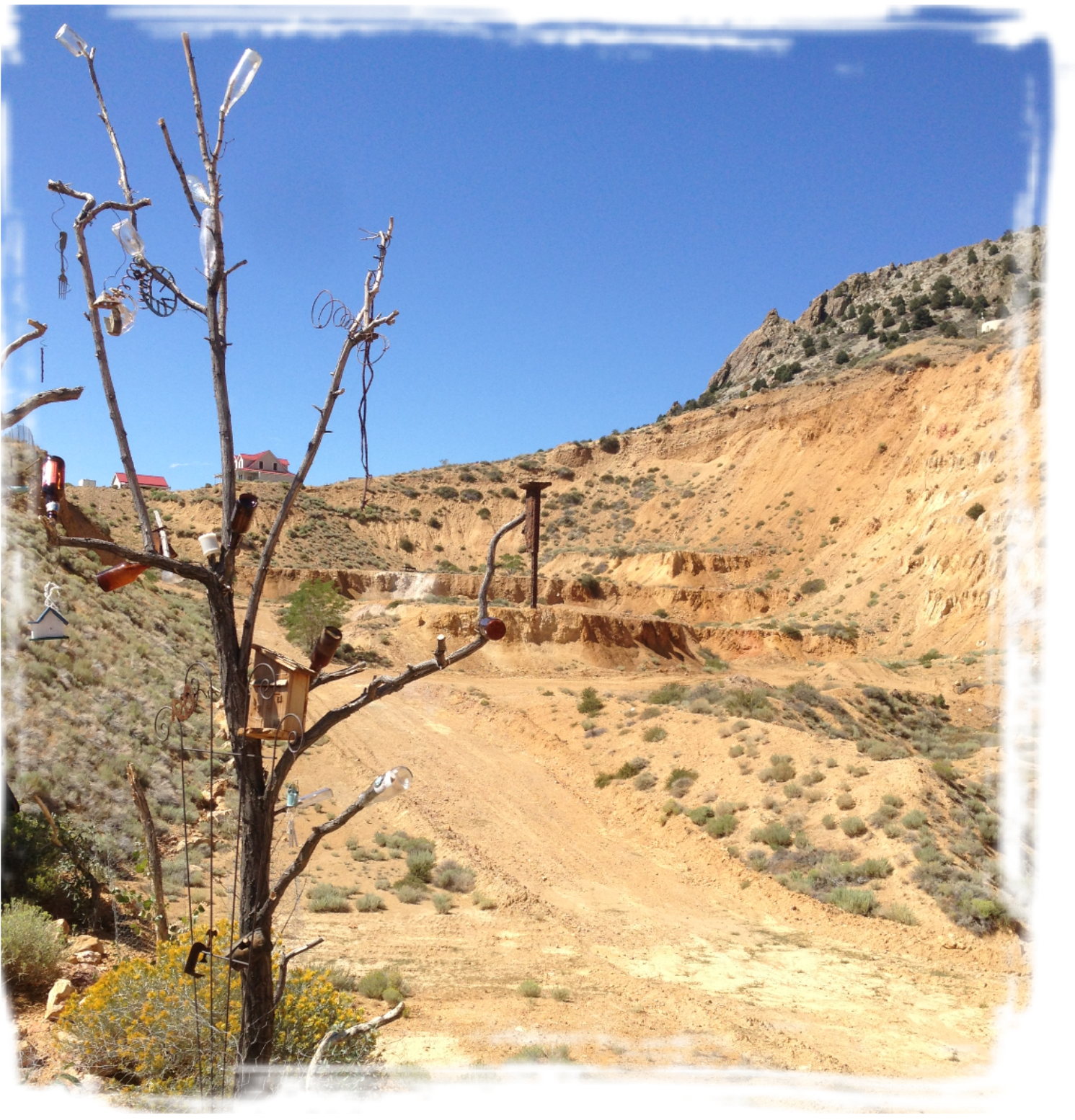
Discovered in 1859, the Savage Mine Pit was an important early Comstock Lode operation and was significant for connecting to the Sutro Tunnel. Its major production years were ended by floods at the 2,200-foot level.
COMBINATION
SHAFT
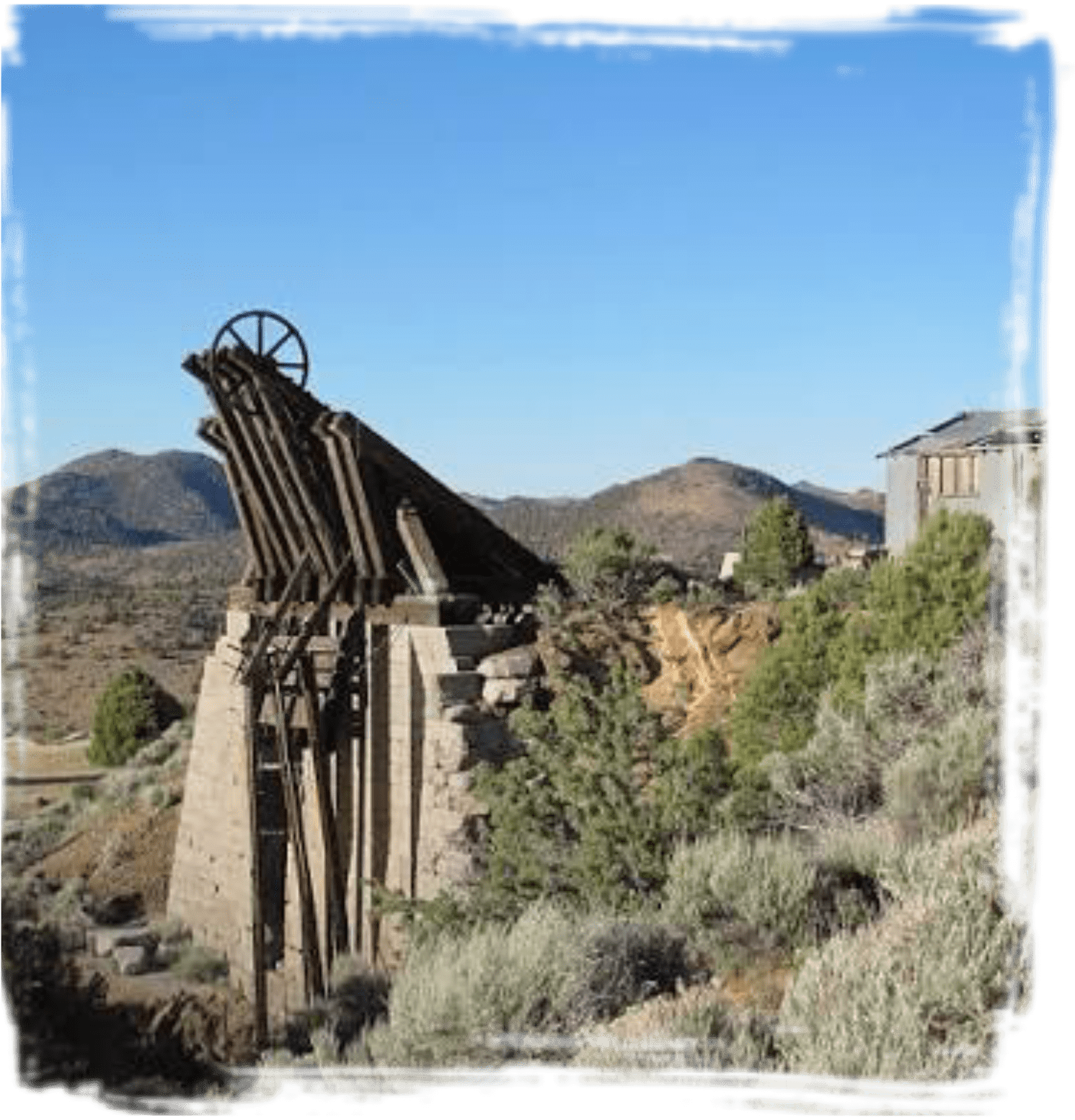
The Combination Shaft was a groundbreaking, 3,250-foot-deep mine shaft built in 1875. As the second-deepest shaft in the world at the time, it was an ambitious engineering feat, but it proved too expensive and difficult to operate due to significant flooding from geothermal heat and the inability of its pumps to keep up with the water flow. Operations ceased in October 1886. The Combination Shaft was one of the costliest ventures on the Comstock ending with virtually no profit and highlighting the immense risks and limitations of deep mining,
PONDEROSA
MINE
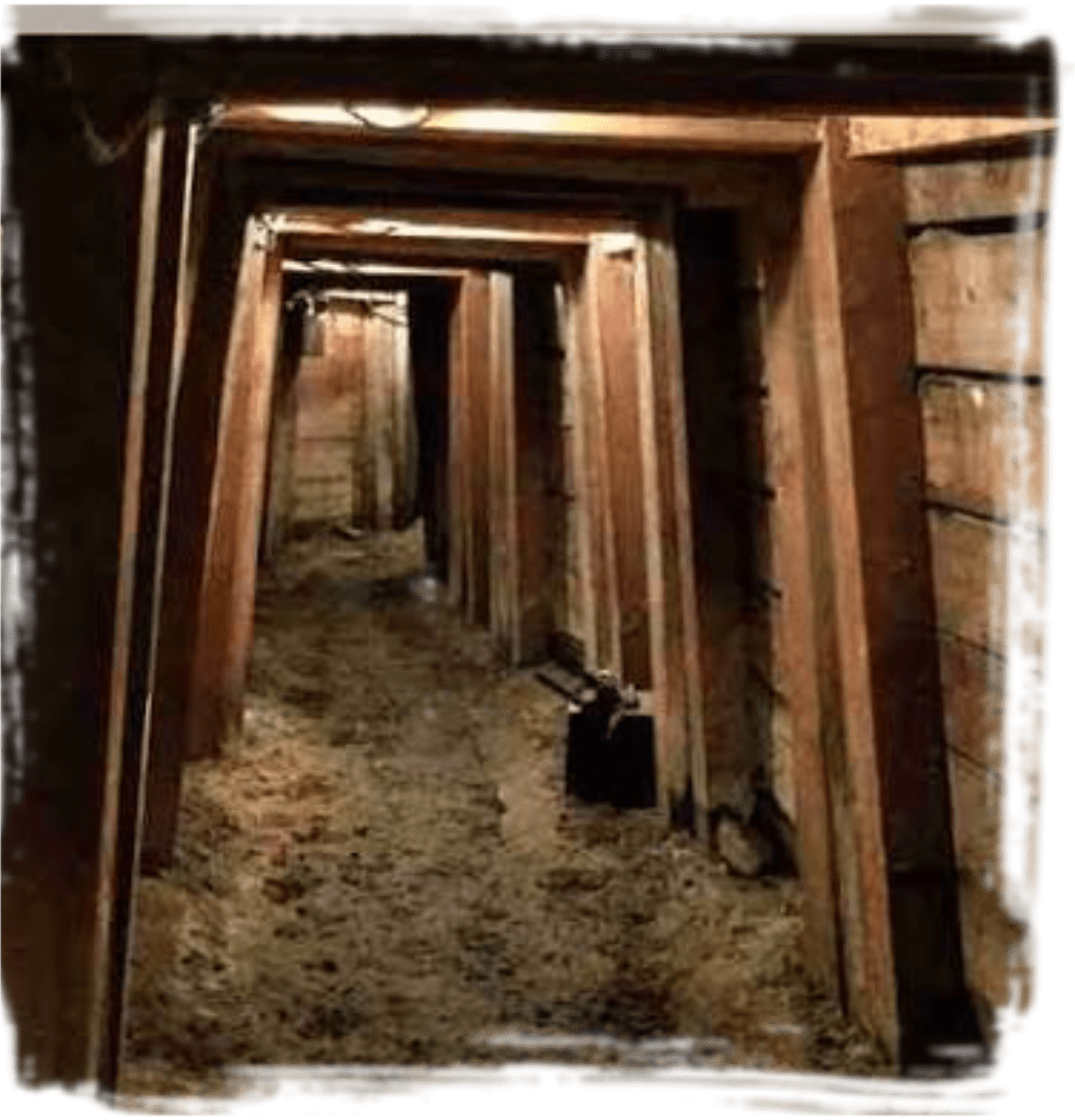
The Best & Belcher Mine was not profitable in the gold rush of the 1800s but became of interest nearly 100 years later when the owners of the Ponderosa Saloon realized that the mine shaft entrance was only a short distance from their saloon, so they dug a tunnel to this forgotten mine and began offering tours. Visitors can get a real glimpse of what it was like working underground with a look at tunnels, crosscuts, drifts, stopes, raises, winzes and shafts.
The 150-year-old establishment, formerly the Bank of California, also features the original 1864 bank vault, which once housed millions in gold and silver. The vault was robbed in 1927, and while the armed robbers were caught shortly after, much of the loot was never recovered and is believed to still be hidden somewhere in the hills around Six Mile Canyon.
CROWN
POINT MILL
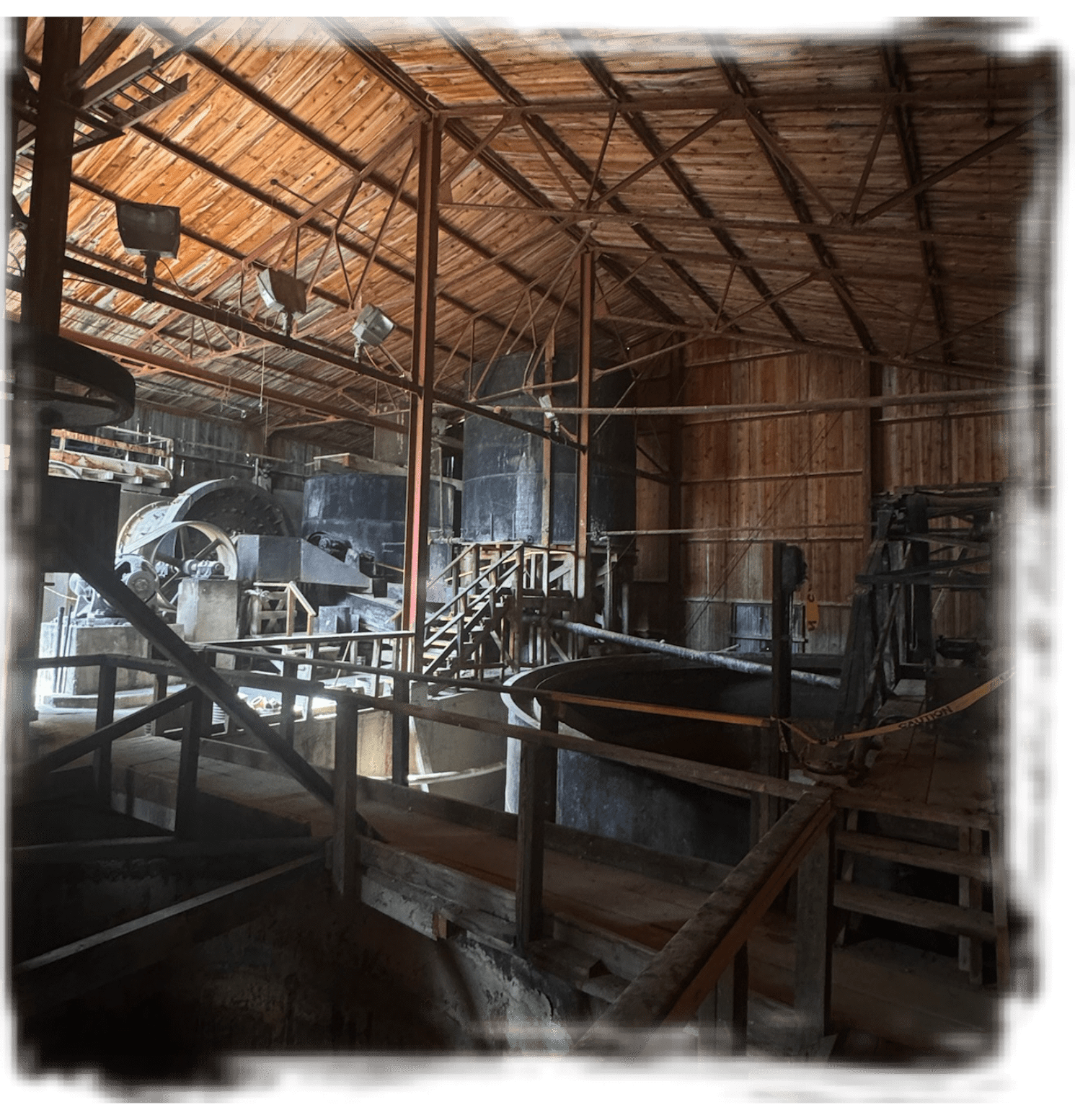
Built in 1935, the Crown Point Mill, once processed ore from the famed Crown Point Mine. Designed to extract silver and gold from the rich 1871 discovery, it operated until 1942, when wartime restrictions forced its closure. The site is believed to be the home of several spirits who perished during the Yellow Jacket Mine Disaster. The 1869 fire spread between the Yellow Jacket and Crown Point, killing at least 35 miners, many of who’s bodies have never been recovered.
Today, the Crown Point site stands as a historic landmark, where visitors can explore original machinery, ore bins, crushers, and other remnants of its mining past.
COMSTOCK
GOLD MILL
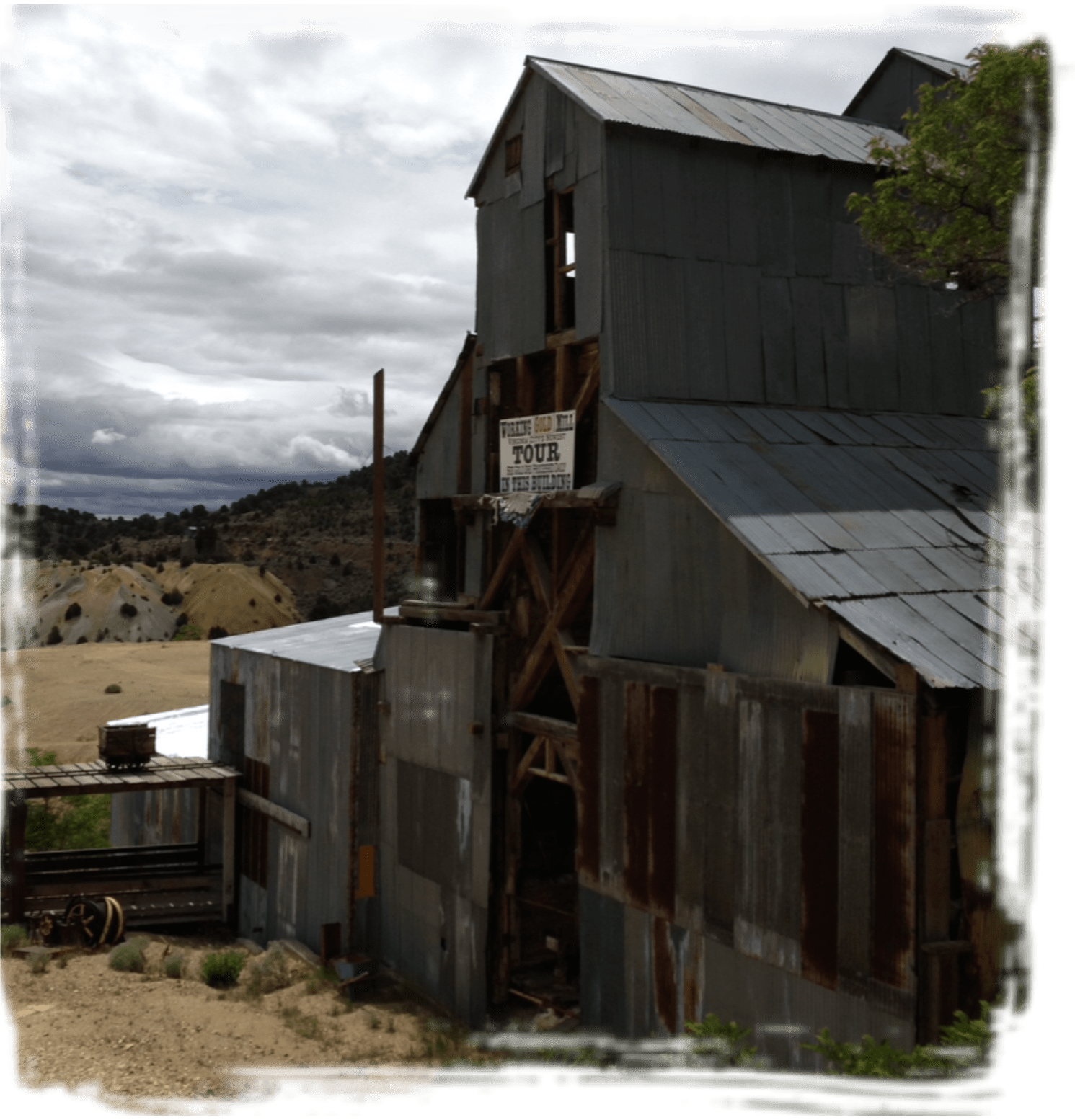
The Comstock Gold Mill is the last fully operational stamp mill in the Nevada. Built in 1864, the mill is a two stamp gold mill, which was used to process gold and silver rich ore by stamping it (or breaking it down) to extract the precious materials.
HISTORIC REMAINS & DISTRICTS
INTERNATIONAL
HOTEL
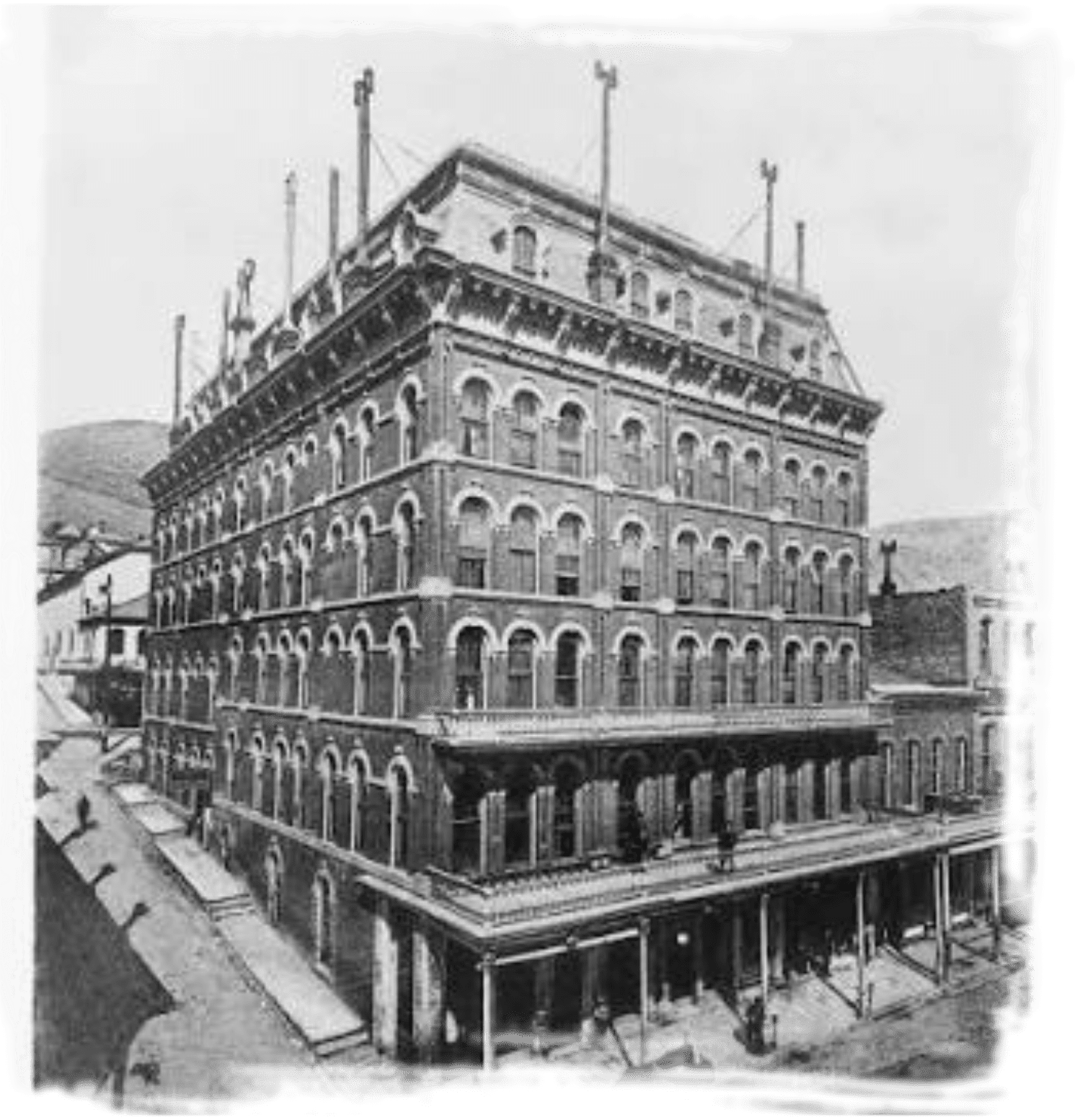
The cursed International Hotel burned down twice. First built in 1860, it was dismantled and rebuilt in 1863. The three-story, luxurious, brick building was touted as fireproof. It burned to the ground during the Great Fire in 1875. Two years later, a third International Hotel was built in the same location and far grander than its predecessors. Considered the most luxurious hotel in the state, it had six stories, 160 rooms, and Nevada’s first hydraulic elevator. The hotel boasted many high-profile guests including President Rutherford B. Hayes. On a cold December morning in 1914, an unexplained fire burned the hotel to rubble in a matter of hours. The people inside had to escape by descending ropes and ladders or leaping out of windows. At least one person was killed, an unidentified man whose body was found in the ruins months after the fire. The wreckage of the hotel remained at the site for two decades before it was cleaned up and turned into a parking lot.
It’s said one room of the International Hotel didn’t burn in the fire of 1914. The room, which faced B Street, was the site of numerous suicides. It’s believed their spirits are the ones seen in the parking lot at night.
GREAT
FIRE
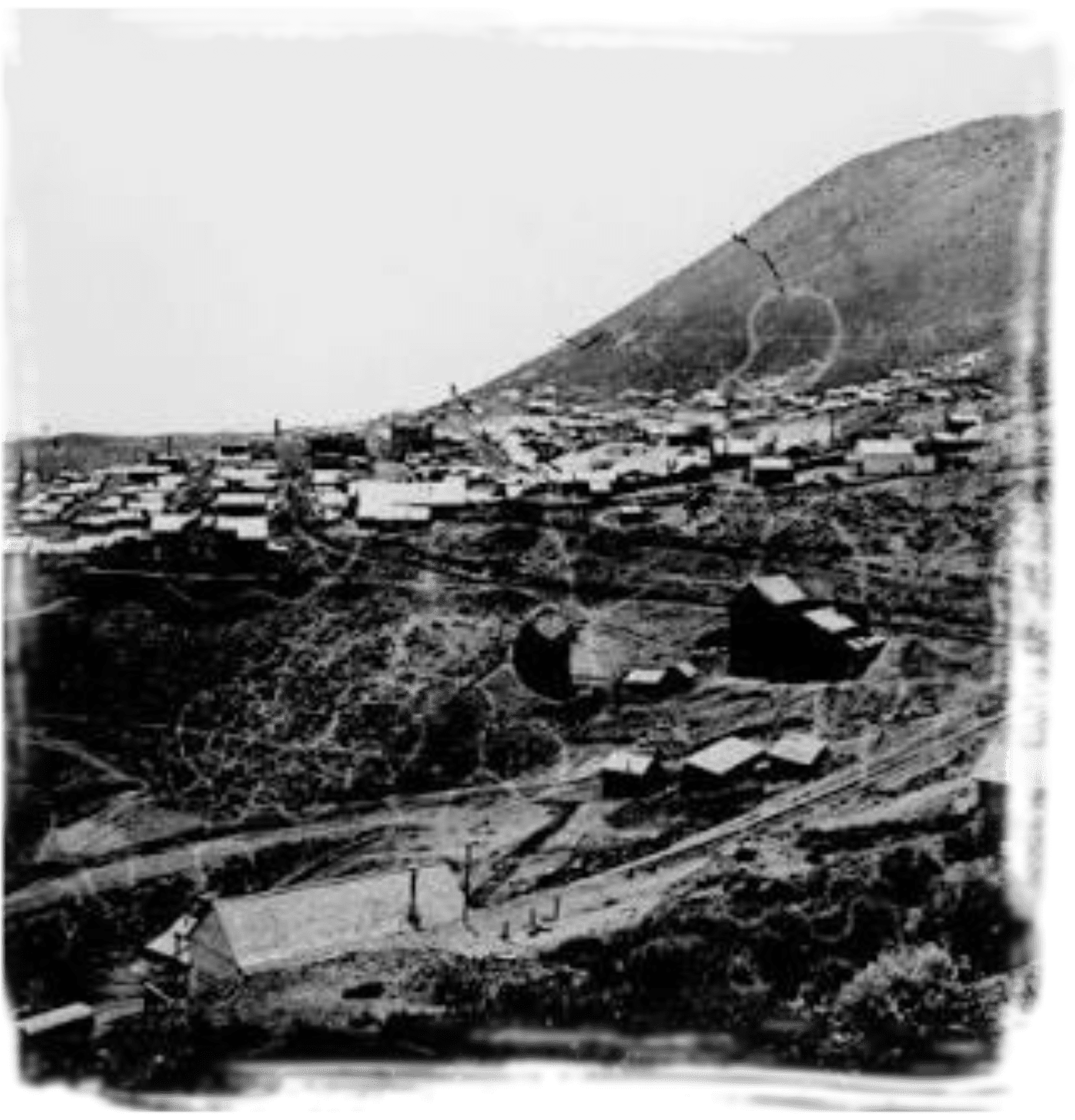
Disaster struck Virginia City happened on October 26, 1875. At 5:15am, a coal oil lamp was knocked over at the boarding house of Crazy Kate, a woman of ill repute, located on A Street. Fueled by dry timbers and Zephyr winds, the fire quickly spread to the north, west, and south. The fire was too hot and too fast. Water ran out and explosives from the mines were used to blow up buildings in an effort to stop the flames. The Virginia City Fire Department could do little but direct residents to evacuate.
As reported by the Sacramento Daily Union “Women were shrieking; the cries of despair; the curses of enraged men; the roar of the flames; the dull reports of explosions as building after building took fire; the heavy thud and crash of falling walls; the snap of bursting iron bars and door.; the howl of the gale- all went to make up a scene of indescribable horror.”
Two-thirds of the city was destroyed – more than 2,000 structures – as well as mines and virtually all the city’s fire equipment. 3,000 were left homeless. Three deaths were reported – one man was killed by the falling walls of a brewery, an unknown drunk man was crushed by a rafter while refusing to leave a bookstore, and a third man reportedly died from falling walls.
*Photo courtesy the Reno-Gazette Journal
RED LIGHT
DISTRICT
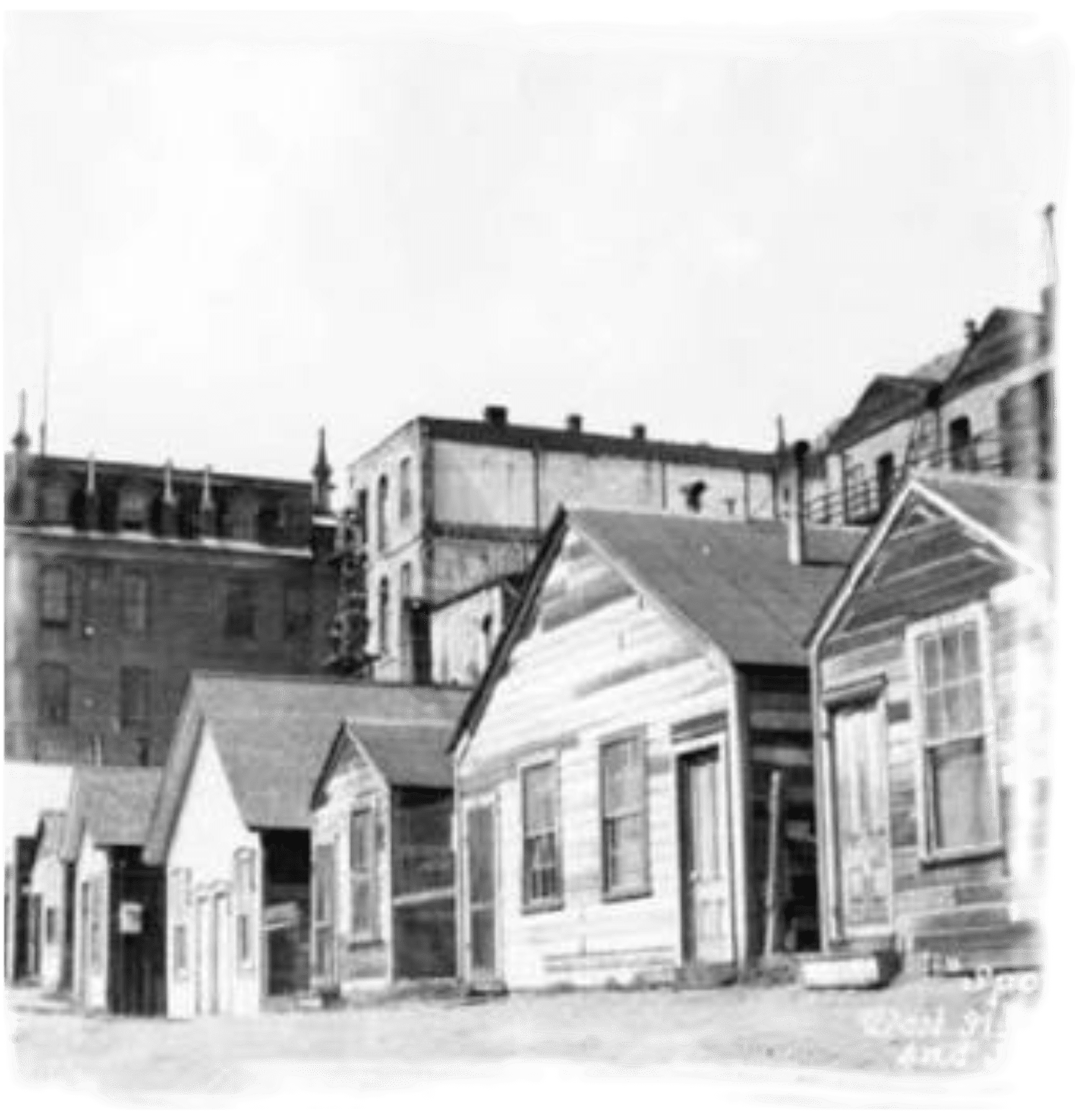
In the 1860s and 1870s, during the height of the Comstock Lode boom, Virginia City’s Red Light district, also known as Sporting Row, thrived just below the main drag on D Street. The block mixed opulent parlor houses with small, discreet cribs, where independent women worked. Notorious yet firmly woven into the fabric of the boomtown, the district stood alongside saloons, theaters, and other businesses catering to the influx of silver miners.
The most famous prostitute to work the district was Julia C Bulette. Bulette was beaten and strangled to death in her bed in Crib 1 on January 20, 1867. Much of her wardrobe, including silks, furs, and jewelry, was missing. Four months later, another independent prostitute awoke to find a dark figure skulking about her room and later identified him as 37-year-old John Millain. Millain was eventually prosecuted for Bulette’s murder and publicly hanged.
Hundreds turned out for Bulette’s funeral. An honorary member of the Virginia Fire Engine Co. No. 1, her fellow firefighters took up a collection and purchased a silver-handled casket. However, the “decent” populace would not let a woman of easy virtue be buried in the cemetery. Bulette was entombed in a lonely grave outside of town with a simple wooden plank marking her final resting place.
*Photo courtesy juliabulette.com
OLD
CHINAtoWn
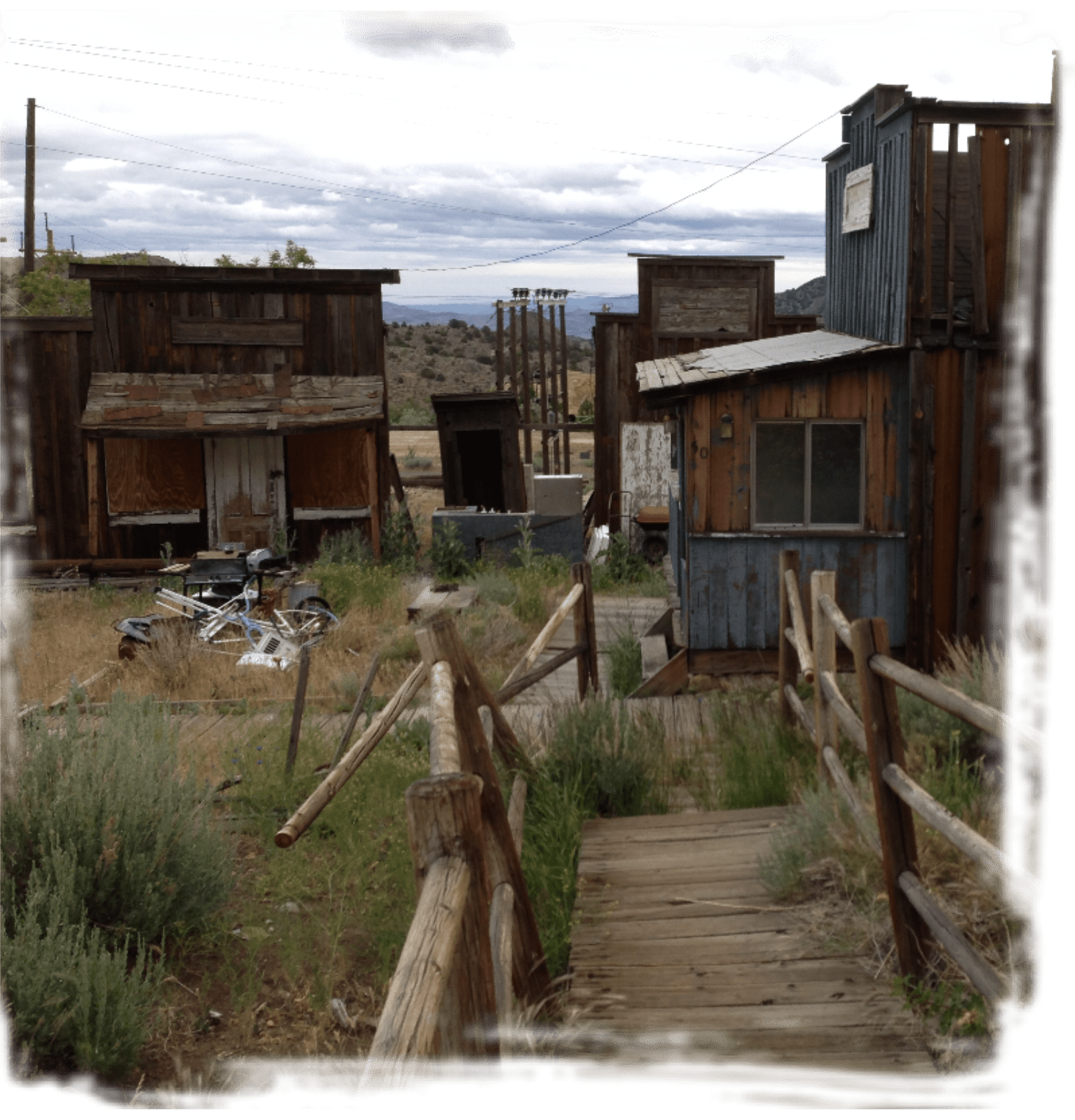
The first Chinese arrived on the Comstock in the early 1860s after working on the Reese River Ditch project in Dayton. Met with prejudice and denied basic rights—such as the ability to hold mining claims—they were often driven from jobs, including railroad work in 1869. Still, they found employment as gardeners, firewood haulers, domestics, and especially in laundries during Virginia City’s Bonanza years. Virginia City’s Chinatown was a large and bustling neighborhood east of the main downtown area that housed 1,500 to 2,000 residents in one and two-story wooden buildings. Chinatown had homes, businesses like laundries, noodle parlors, opium dens, as well as a central Joss House temple for religious and social gatherings. The community eventually declined due to discrimination and economic decline with many original structures later demolished.
TRANSPORTATION & LANDSCAPE
V&T
RAILWAY
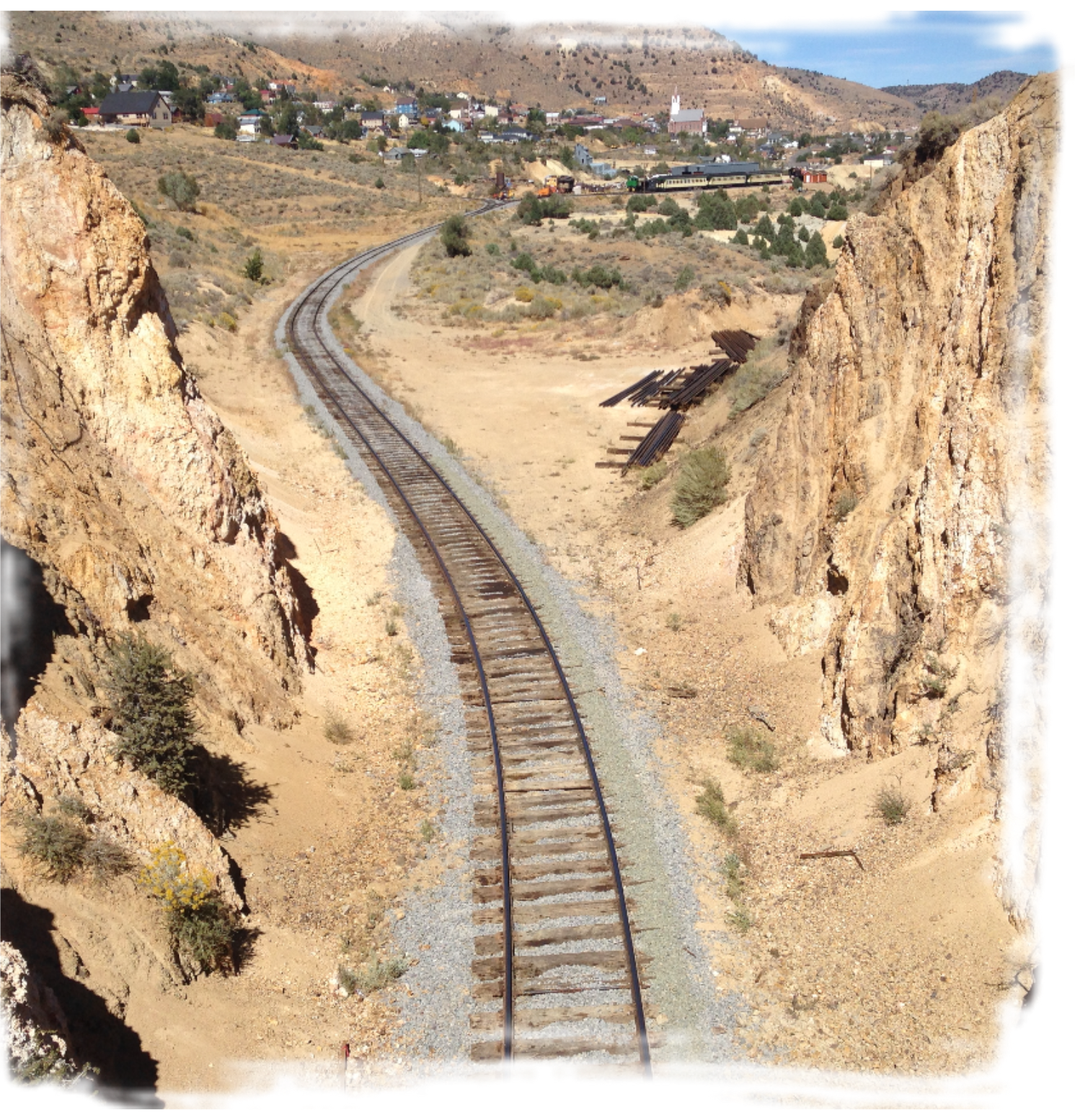
Forged in the heat of Nevada’s silver boom, the Virginia & Truckee Railroad Company has been a permanent fixture of Virginia City since 1869 as is one of the most famous of all American Short Line Railroads. In its heyday, the Virginia & Truckee Railroad hauled millions upon millions of dollars in gold and silver ore from the mines deep below Virginia City and the surrounding areas, running an impressive 45 trains per day for 74 years straight. The V&T also ran passenger cars including the McKeen which is considered to be one of only three national historic landmarks that moves.
When the last original train rolled in 1950, these rails could have fallen silent forever. But they didn’t. Thanks to decades of tireless work by train enthusiasts, state agencies, historians, and community members, V&T Railway was brought back to life piece by piece. Locomotives were restored, track was rebuilt, and history was preserved in the hopes coming generations would continue to create stories that stood the test of time.
FREIGHT
DEPOT
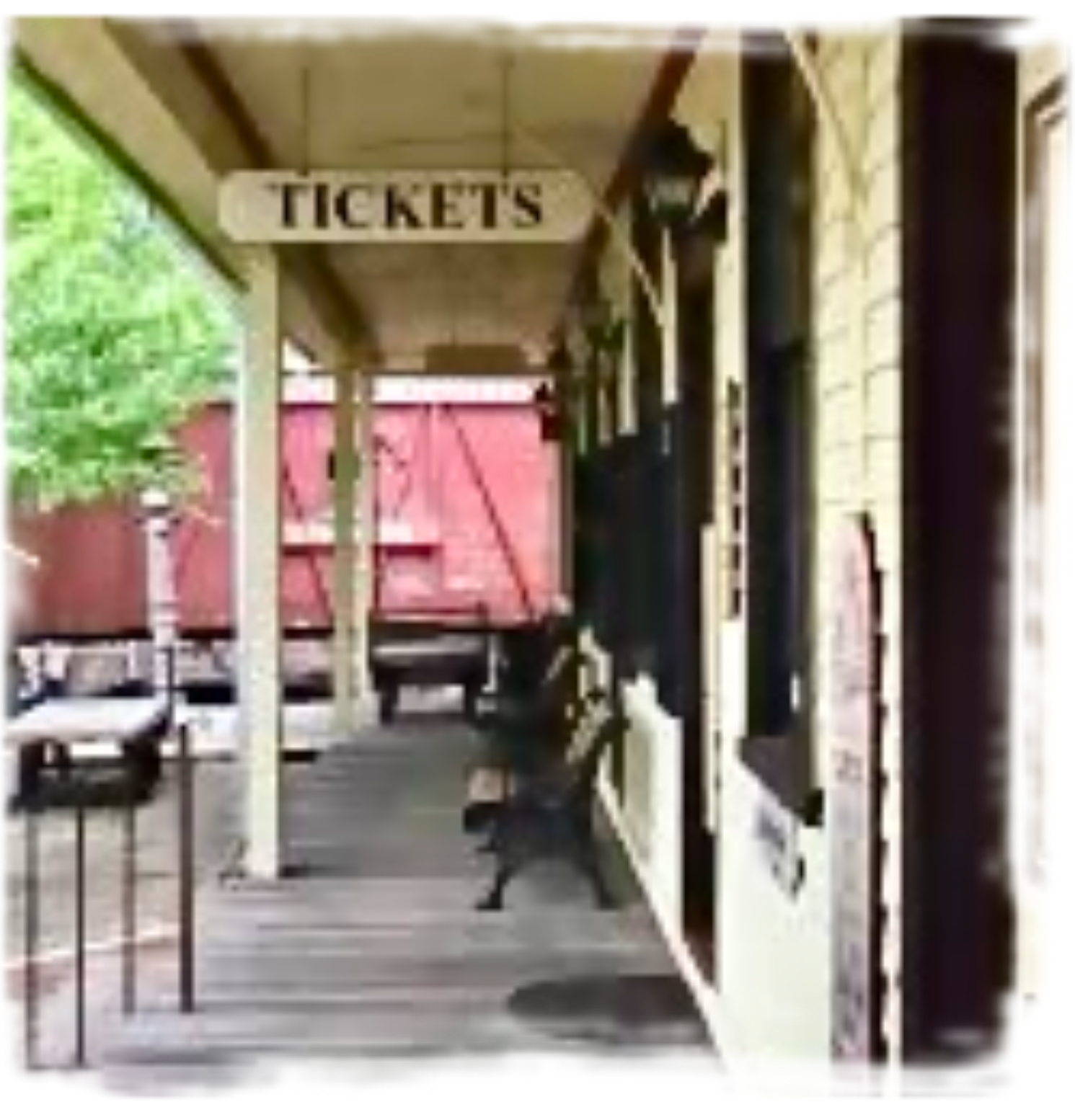
The Freight Depot was built in the early 1870s to handle large shipments to and from mills, as well as goods for the Virginia City’s booming population. Destroyed by the Great Fire in 1875, the shed that stands today was built in 1877. The depot operated until 1938 after which time it was used as a stable, lumber, and storage house. Today, it remains largely unaltered and serves as a ticket location for V&T train operations.
SIX MILE
CANYON
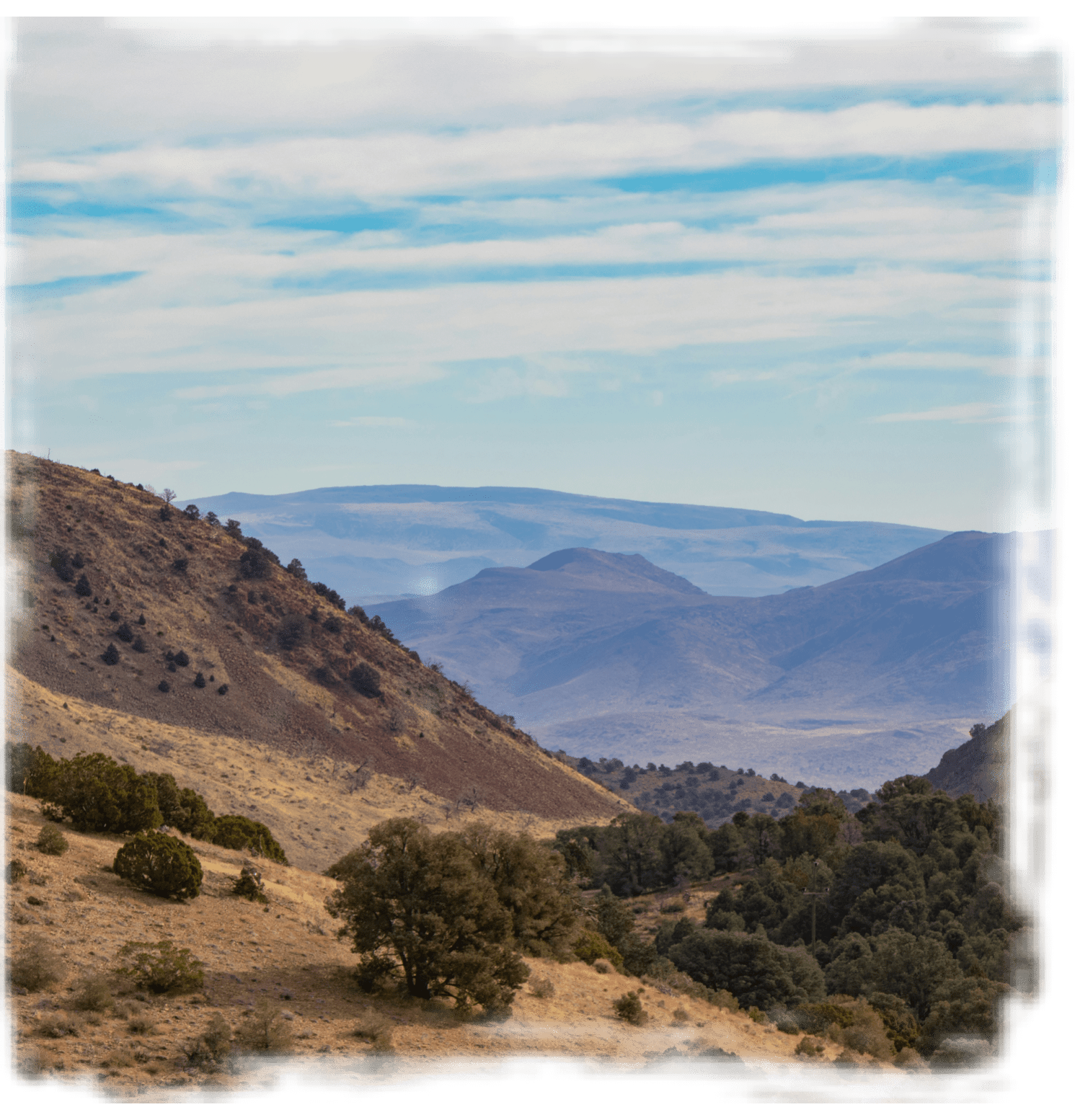
Six Mile Canyon was a hub of early mining and settlement during the mid-19th century, where gold and silver discoveries fed the Comstock Lode. Camps like Mount Pleasant and Ophir flourished alongside mills such as the Empire State and the Butters Mill—the largest cyanide mill in the nation. Today, visitors can still see remnants of that era, from tailing piles and mill foundations to the landmark Sugarloaf Mountain, while the winding Six Mile Canyon Road links Virginia City with U.S. 50 near Dayton.
“Black Jake” Davis is said to haunt Six Mile Canyon to scare away anyone seeking his fortune. Davis arrived on the Comstock in 1859 and lived a double life —stable owner by day, stagecoach and train robber by night. He later built a small bullion mill in Six Mile Canyon to melt down his stolen gold. Davis sold his stolen gold as legitimate gold bars and buried his profits. He was eventually arrested, released, then shot in the back during a robbery attempt. Legend has it his fortune is still buried in Six Mile Canyon. His screaming, winged phantom is said to appear to lone travelers and fortune seekers.
LAWS OF THE
LAND
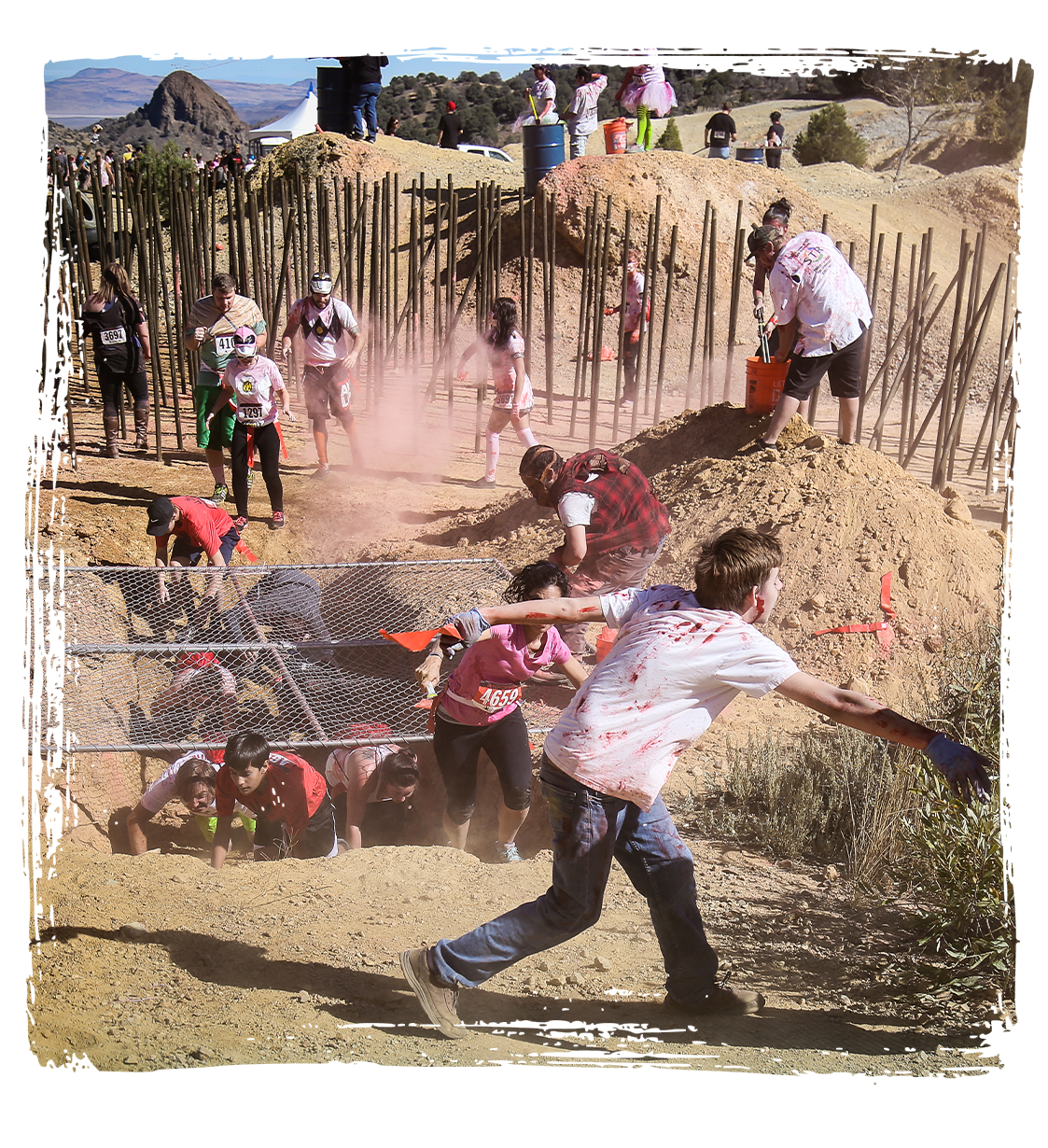
SHOW VIRGINIA CITY SOME RESPECT
Virginia City is a Historic National Landmark District. Respect it. No running inside buildings or on sidewalks. Leave locations in the same state in which you found them. Disrespecting historic buildings, landmarks, or the items in them will result in removal from the event without a refund.
No pushing, kicking, tripping, tackling, spitting or any other kind of aggressive action. This type of behavior is strictly prohibited. The only grabbing is zombies grabbing flags. This is not a contact sport. Any type of hostile behavior will result in removal from the event without a refund.
No weapons allowed.
Flags must be attached to the belts provided. Flags are to be worn on a competitor’s sides. Do not tuck in the flags, tie them in a knot, safety pin them, or hang them in the front or back of the belt.
Zombies can only go after competitors’ flags in designated Dead Zones. Going after flags is prohibited on sidewalks, buildings, in Scare Zones, and anywhere not designated as a Dead Zone. Violation of this rule will result in removal from the event for the offending zombie.
If a competitor falls to the ground they are off limits to all creatures. If you see someone fall, help them up.
You must wear your bib at all times. If you are caught without it, you will be removed from the event without a refund.
The only transportation allowed is your feet. If any member of your team gets in a car, hops on a motorcycle, cycles through town on a bike, pulls a skateboard out of their backpack, rolls down the sidewalk on a Rascal… whatever… your team will be disqualified.
This event is designed to be a fun and exhilarating experience for all participants. To ensure this, everyone needs to be respectful of all rules and a good dose of common sense here couldn’t hurt.
FOR YOUR SURVIVAL

This is your key to unlocking your future.
IN MEMORIAM GALLERY


THE VIDEOS


SPONSORS
SPONSOR PACKET

STAY ALIVE
LOCATION